
A commercial Truck Engine is more than a horsepower figure. It affects fuel use, payload capacity, maintenance schedules, and the hours a truck stays on the road. The right Truck Engine depends on the work: a long-haul tractor climbing open highways has different needs from a vocational truck making repeated stops. No engine wins every route.
The costs are significant. The American Transportation Research Institute’s 2024 “An Analysis of the Operational Costs of Trucking” reported average marginal operating costs of $2.27 per mile in 2023. That makes fuel efficiency and uptime practical business measures, not just sales claims. A small difference in consumption can matter across thousands of miles. Still, published ratings do not tell the whole story.
This guide compares 10 leading engines for commercial trucks by power, torque, efficiency, service support, and suitability for different duty cycles. It also considers real-world details, such as frequent idling, heavy loads, and access to qualified maintenance. Engine specifications can vary by model year and configuration, so buyers should confirm ratings with manufacturers and authorized dealers. A top-ranked engine may not be the best fit for your fleet. That is worth remembering.
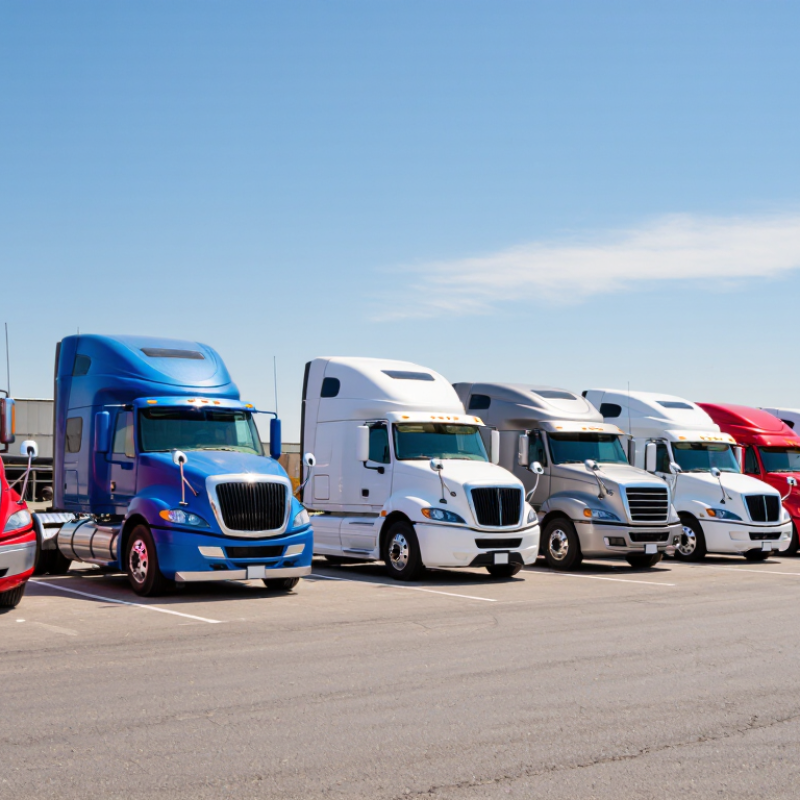
Commercial truck engines are classified by fuel, displacement, cylinder layout, and intended duty cycle. A city-delivery engine faces repeated stops; a long-haul tractor needs steady power across highway grades. Torque matters. Peak horsepower alone misses low-speed pulling strength, cooling limits, and performance under a loaded trailer. Fleet evaluators compare torque curves, fuel use, service intervals, emissions controls, and expected overhaul life. The U.S. Department of Energy’s Alternative Fuels Data Center reports typical diesel-engine efficiency of 30–35%, compared with 20–25% for gasoline engines. Those figures are broad estimates, not a promise for a particular route or vehicle.
Testing should reflect real work: payload, idle time, terrain, climate, and annual mileage. A one-hour dynamometer result cannot reproduce a winter start or a crowded loading dock. The U.S. EPA’s 2024 Phase 3 heavy-duty vehicle rule projects about one billion metric tons of greenhouse-gas reductions through 2055. That policy-level estimate makes emissions performance material, but it does not rank individual engines.
Compare certified emissions alongside fuel economy and repair records. So does downtime. A clean test result can still mislead. Engines should be judged against the truck’s actual duty cycle, not a brochure’s best-case figure.

Choosing among ten leading commercial truck engine types starts with the route, payload, and daily stop count. A compact four-cylinder diesel can suit lighter regional work. A 6–7-liter six-cylinder often fits medium-duty delivery. Engines in the 8–9-liter range balance power and weight for heavier local routes. A 10–11-liter design may serve regional hauling with frequent highway miles. For heavier loads, 12–13-liter engines offer a broader operating range. The familiar 15-liter class is commonly considered for demanding long-haul work. Size alone does not decide the winner.
A high-output 15-liter setup can help with steep grades, but it may be unnecessary on flat routes. A low-speed tune can prioritize steady pulling rather than quick acceleration. A vocational diesel, built for repeated starts and power takeoffs, suits work sites better than many highway-focused setups. Natural-gas engines may appeal to fleets with suitable fueling access and route planning.
I would compare all ten by total operating needs, not peak horsepower. Small details matter: a loaded truck climbing a grade, idling at a dock, or stopping every few blocks has different demands. Maintenance access, cooling capacity, transmission matching, and local service support deserve close attention.
Even good estimates miss things. Real route data helps.
Commercial truck engines are best compared by usable power, fuel consumption, and durability under a specific workload. Peak horsepower matters on steep grades and busy highways, but it rarely tells the whole story. For a heavily loaded tractor, torque at low engine speeds can mean fewer downshifts and steadier progress. That can reduce driver fatigue, too. Short urban routes need a different balance, with responsive acceleration and efficient operation during frequent stops.
Fuel efficiency depends on more than engine design. Payload, terrain, idling, gearing, and maintenance all change the result. Compare fuel use across similar routes, not just manufacturer figures. Reliability deserves equally careful scrutiny: service intervals, parts availability, cooling performance, and repair history can matter more than a headline power rating. Check the details. A spec sheet cannot show how an engine behaves after hours of climbing in summer heat. It is easy to overvalue horsepower here; I would give more weight to verified fleet records and the truck’s real duty cycle. Even then, comparisons are imperfect. A well-maintained engine in the right application may outperform a more powerful option that is poorly matched.
The best engine depends on the route, load, and hours spent idling—not just peak horsepower. Long-haul tractors carrying heavy loads across hills usually need a durable diesel with strong low-speed torque and efficient cruising. A regional truck making frequent stops may benefit from a smaller-displacement diesel, where responsive acceleration and manageable fuel use matter more than maximum output. That matters. Record typical payloads, daily mileage, idle time, and grades before comparing specifications.
For predictable urban routes, such as refuse collection or local delivery, battery-electric power can suit short distances and frequent braking, provided depot charging is available. The IEA’s Global EV Outlook 2024 reports that electric trucks reached about 1.2% of global truck sales in 2023, showing growth but still limited adoption. Natural-gas engines may fit fleets with dependable local fueling and fixed routes; check station access and maintenance needs before committing. Real routes vary. The American Transportation Research Institute’s 2024 operational-cost report puts average trucking costs at $2.27 per mile in 2023. That figure is not an engine comparison, but it underlines why fuel use and downtime deserve close attention. A neat spec sheet can mislead; verify choices with real duty-cycle data.
| Engine Type | Typical Displacement | Typical Output | Best-Fit Applications | Why It Suits the Job | Key Consideration |
|---|---|---|---|---|---|
| Inline-4 diesel | 3–5 L | 150–250 hp 400–700 lb-ft | Urban delivery trucks, utility vehicles, light vocational trucks | Compact size and lower operating mass suit frequent stops and lighter loads. | Limited reserve power for heavy payloads, steep grades, or sustained highway hauling. |
| Inline-6 diesel, light-duty | 5–7 L | 200–300 hp 520–860 lb-ft | Medium-duty box trucks, local distribution, smaller dump trucks | Provides a useful balance of torque, durability, and manageable vehicle weight. | Confirm the engine rating and cooling package match the truck’s loaded operating conditions. |
| Inline-6 diesel, medium-duty | 7–9 L | 250–350 hp 700–1,050 lb-ft | Regional delivery, refuse trucks, fire-service vehicles, vocational fleets | Broad low-speed torque supports repeated starts, moderate loads, and equipment-driven work. | Idle time and stop-start duty can have a major effect on fuel use and maintenance needs. |
| Inline-6 diesel, heavy medium-duty | 9–11 L | 300–450 hp 1,000–1,650 lb-ft | Heavy refuse collection, construction, regional haulage | Offers stronger pulling performance for heavier bodies, frequent starts, and demanding routes. | Check axle ratios and transmission gearing to keep the engine in its effective operating range. |
| Inline-6 diesel, regional-haul | 11–13 L | 350–500 hp 1,250–1,850 lb-ft | Regional freight, tanker work, loaded flatbeds, mixed highway routes | A versatile displacement class with enough power for varied payloads and terrain. | Higher-output ratings may require a stronger cooling system and drivetrain components. |
| Inline-6 diesel, heavy-haul | 13–15 L | 450–600 hp 1,550–2,050 lb-ft | Long-distance heavy freight, steep routes, heavy vocational trucks | High torque and power support sustained highway operation with substantial loads. | Engine size and rating should be matched to legal gross weight, route profile, and duty cycle. |
| Inline-6 diesel, high-output | 15–16 L | 500–650 hp 1,700–2,250 lb-ft | Heavy haul, mountainous routes, demanding high-payload applications | Provides substantial power reserve for difficult grades and prolonged high-load operation. | Fuel use, purchase cost, and maintenance requirements can be higher than with smaller engines. |
| V8 diesel | 14–16 L | 500–600 hp 1,700–2,050 lb-ft | Specialized heavy haul, heavy vocational work, applications where packaging matters | Its compact overall length can suit certain chassis layouts while providing high power. | Compare total lifecycle cost, service access, and parts support with an inline-six alternative. |
| Spark-ignited natural-gas engine | 8–12 L | 250–400 hp 900–1,450 lb-ft | Refuse collection, municipal fleets, fixed-route regional operations | Can be a practical option where fueling infrastructure and fleet operating patterns support natural gas. | Fuel availability, onboard storage, route range, and payload impact should be assessed before purchase. |
| Gasoline V8 | 6–7 L | 300–400 hp 400–500 lb-ft | Light and medium-duty work trucks, local service fleets, intermittent-duty use | Can suit applications with lower annual mileage and readily available gasoline fueling. | For continuous heavy loads or high-mileage highway work, compare fuel costs and diesel alternatives. |
Choosing an engine for a commercial fleet starts with the work, not a spec-sheet headline. List each truck’s typical payload, annual mileage, idle time, and route profile. A regional delivery truck stopping every few blocks faces different demands from a loaded tractor climbing long grades. Match engine output and torque to the heaviest routine load, not an imagined worst case. Too little reserve can strain schedules; excessive capacity can raise purchase and operating costs. That trade-off matters.
Compare fuel use under your actual duty cycle. Ask service teams about maintenance intervals, common repair times, parts availability, and warranty terms. Look beyond peak horsepower. Low-speed torque can help with starts on steep yards, while gearing and axle ratios affect highway efficiency. Check chassis compatibility, cooling capacity, and service coverage along routes. Estimate total cost using fuel, downtime, maintenance, and expected resale—not fuel economy alone. Numbers vary.
Before committing, pilot preferred configurations on representative routes. Record fuel consumed, idle hours, average loads, and driver feedback over several weeks. A short trial may miss seasonal changes, so treat its results cautiously. Confirm the engine meets applicable emissions requirements in the truck’s operating regions. Fleet data is imperfect; clean records help, but rarely explain every delay. Choose an option your technicians can support consistently, even if its brochure figures look less impressive.
![]() |
Need Help? Call Us 203-740-1877
|
We're ready to help identify, size and spec your pumps, filters |
Pumps, Parts, and Equipment – Guidance Included
103 Hempel Drive
Wolcott, CT 06716
Telephone: 203-740-1877
Toll Free Fax: 866-523-1693
Email: sale@rewritertool.com
