


China Top Electric Diaphragm Pump Manufacturers?
Choosing among China’s top electric diaphragm pump manufacturers requires more than comparing prices or motor ratings. Buyers need evidence of stable flow, dependable sealing, safe electrical design, and responsive technical support. An electric diaphragm pump may look compact on a product page, yet its real performance appears under pressure, with abrasive liquids, changing viscosity, and repeated start-stop cycles.
Pump industry consultant and author Dr. Lev Nelik often stresses, “The right pump is selected by the system, not by the pump alone.” This principle matters when evaluating Chinese suppliers. A capable manufacturer should explain diaphragm materials, insulation class, protection rating, flow accuracy, head limits, and expected service life. It should also provide test records, installation guidance, spare-part availability, and clear warranty terms. Claims need proof.
Look beyond polished catalogs.
The strongest manufacturers usually show practical experience through customized designs, documented factory testing, and consistent component sourcing. Their engineers can discuss EPDM, PTFE, Santoprene, or other diaphragm options without hiding behind vague language. They should also clarify how the pump handles dry running, pulsation, heat, and chemical compatibility.
Still, no shortlist is perfect. Published specifications may not reflect every field condition. A supplier with excellent export experience may offer limited local support. Another may provide attractive pricing but weaker validation data. This guide examines leading Chinese manufacturers through performance, engineering depth, quality control, certifications, delivery capability, and customer feedback. The goal is not to promote the loudest brand. It is to identify suppliers that can deliver reliable pumping in real operating environments.
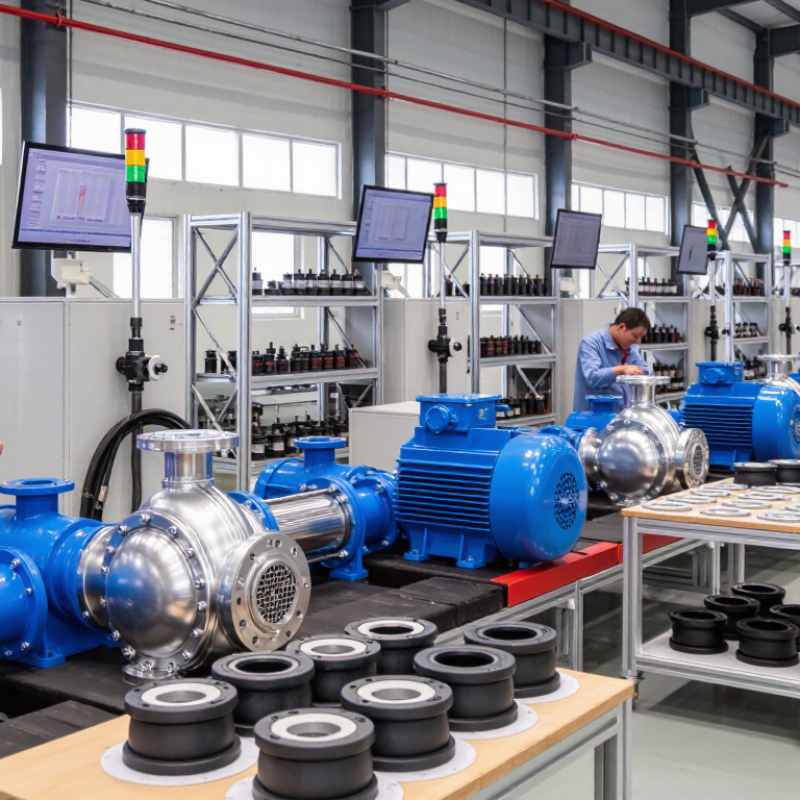
What Is an Electric Diaphragm Pump?
An electric diaphragm pump moves liquid by flexing a sealed membrane with an electric motor. The motor drives a crank, cam, or eccentric mechanism. This repeated motion expands and compresses the pumping chamber. Inlet and outlet check valves control flow direction. The liquid remains separated from the motor and drive parts. That separation helps when handling corrosive, dirty, or shear-sensitive fluids. It is not magic. Pressure comes from displacement and resistance in the discharge line.
Unlike an air-operated diaphragm pump, this design needs no compressed-air supply. It can provide steady flow with suitable speed control and fewer supporting systems. Electric models serve dosing, water treatment, printing, chemical transfer, and small process applications. Technicians should check diaphragm material, valve compatibility, flow rate, lift, and pressure. A pump designed for water may fail quickly with solvents or abrasive slurries. Viscosity also changes performance. A narrow hose can create unexpected heat and noise.
Reliable selection depends on measured conditions, not catalogue flow alone. Measure the liquid. Record temperature, solids content, operating hours, and electrical supply before purchasing. Dry running may damage some diaphragms, although protection varies by design. Field technicians often find reduced output comes from a clogged inlet filter, not pump failure. That detail is easy to miss. Maintenance includes checking seals, valves, fasteners, and abnormal pulsation. Variable-speed control can improve dosing, but excessive speed may shorten diaphragm life. Real systems are less tidy.
China Top Electric Diaphragm Pump Manufacturers? - What Is an Electric Diaphragm Pump?
| Data Dimension | Typical Technical Data | What It Means | Common Applications |
|---|---|---|---|
| Pump Definition | Positive-displacement diaphragm pump driven by an electric motor | An electric motor moves one or more flexible diaphragms to transfer liquid without a rotating impeller inside the pumped fluid. | Chemical dosing, wastewater transfer, filtration, printing, food processing, and general fluid handling |
| Operating Principle | Reciprocating diaphragm movement with inlet and outlet check valves | The diaphragm creates alternating suction and discharge strokes, while the valves control liquid direction. | Clean liquids, contaminated liquids, slurries, and some shear-sensitive fluids |
| Typical Flow Rate | Approximately 0.5–300 L/min, depending on pump size and design | Flow is generally adjustable through motor speed control, stroke control, or a variable-frequency drive. | Laboratory circulation, chemical transfer, industrial process lines, and tank emptying |
| Typical Discharge Pressure | Approximately 2–20 bar, with higher values available in specialized designs | The actual pressure depends on diaphragm construction, motor power, valve design, liquid viscosity, and flow rate. | High-resistance piping, filter presses, spray systems, and pressure-assisted transfer |
| Self-Priming Capability | Commonly available; practical lift is often about 3–8 m when properly configured | The pump can remove air from the suction line and begin pumping without being completely filled with liquid, subject to design limits. | Below-grade tanks, mobile equipment, drainage, and intermittent transfer duties |
| Dry-Running Tolerance | Often better than centrifugal pumps, but continuous dry running is not suitable for every model | The permitted dry-running time depends on diaphragm material, valve design, speed, temperature, and lubrication arrangement. | Intermittent dosing, suction-line evacuation, and fluid transfer with variable liquid levels |
| Solid-Handling Capability | Typically about 1–10 mm for models designed with suitable valve passages | Solid-particle tolerance is determined by the valve opening, diaphragm clearance, particle shape, and liquid concentration. | Wastewater, slurries, ceramic suspensions, sludge, and abrasive process liquids |
| Motor Power Range | Approximately 0.12–7.5 kW for common industrial electric diaphragm pumps | Required power increases with flow, discharge pressure, viscosity, specific gravity, and operating efficiency. | Small dosing systems through medium-duty industrial process equipment |
| Power Supply | Common options include 110–120 V, 220–240 V, and 380–415 V; single-phase or three-phase | The correct voltage and frequency must match the electrical system and motor nameplate. | Portable equipment, plant utilities, automated production lines, and fixed pump stations |
| Wetted Materials | Polypropylene, PVDF, PTFE, stainless steel, cast iron, EPDM, NBR, and FKM are commonly used | Material selection must consider chemical compatibility, temperature, abrasion, concentration, and cleaning requirements. | Acids, alkalis, solvents, oils, detergents, wastewater, and food-related liquids |
| Liquid Temperature | Common operating range: approximately 5–80°C; some material combinations support higher temperatures | Temperature limits apply to the diaphragm, valves, seals, housing, and motor—not only to the liquid. | Ambient-temperature transfer, washdown systems, chemical processing, and warm cleaning fluids |
| Flow Characteristics | Pulsating flow; pulsation dampeners may be installed when a smoother flow is required | The reciprocating action produces pressure and flow fluctuations that can affect instruments and downstream piping. | Metering, filtration, spraying, filling, and pressure-sensitive process systems |
| Viscosity Range | Often suitable for low- to medium-viscosity liquids; some designs handle higher viscosity at reduced speed | As viscosity increases, flow may decrease and motor load may rise, so performance curves should be checked. | Adhesives, oils, coatings, detergents, concentrates, and process chemicals |
| Control Options | On/off control, variable-frequency drive, speed controller, timer, sensor feedback, or PLC integration | Electrical control allows the pump output to be adapted to changing process requirements. | Automated dosing, batch processing, level-based transfer, and remote pump stations |
| Main Advantages | Self-priming, good chemical resistance, low shear, dry-running tolerance, and relatively simple maintenance | The diaphragm separates the drive mechanism from the pumped liquid, reducing the need for a conventional shaft seal in the wetted area. | Difficult fluids, corrosive liquids, contaminated liquids, and applications requiring flexible installation |
| Main Limitations | Pulsation, diaphragm wear, valve sensitivity, noise or vibration, and limited maximum flow compared with some centrifugal pumps | Correct sizing, compatible materials, suitable suction piping, and periodic inspection are essential for reliable operation. | Applications requiring very smooth flow, extremely high flow rates, or tight particle-free service |
| Key Selection Criteria | Flow rate, pressure, liquid composition, temperature, viscosity, solids content, suction lift, electrical supply, and control method | A pump should be selected from verified performance data rather than rated maximum values alone. | Industrial fluid transfer, chemical processing, wastewater treatment, food production, and equipment integration |
Related Posts
-
Best Diaphragm Pump Manufacturers in China?
-
Top 10 Benefits of Using an Air Diaphragm Pump?
-
China Best Air Diaphragm Pump Models and Their Applications?
-
What is a Diaphragm Pump and How Does It Work?
-
2026 Top 1 Diaphragm Pump Types for Global Buyers
-
Top 10 Diaphragm Pump Applications for Efficient Fluid Transfer
 |

|
We're ready to help identify, size and spec your pumps, filters |