


How to Choose the Best 55 Gallon Barrel Pump?
Choosing the right 55 gallon barrel pump starts with the liquid, not the price tag. A pump suited to water may be unsuitable for a thick syrup or a cleaning solution. Check the product’s compatibility chart and manufacturer guidance before ordering. Small details matter. A narrow drum opening, a viscous fluid, or frequent transfers can change which design works best.
This guide explains how to compare manual and powered pumps, expected flow rates, wetted materials, and discharge options. It also considers practical details: whether the pump reaches the bottom of your drum, how easily it can be cleaned, and where the liquid will go. A stainless-steel body may suit some applications, while compatible plastics may work better for others. There is no universal winner. Even a high-flow model can be a poor choice if it cannot handle the fluid safely or fit your setup. That part is easy to overlook.
Use the recommendations as a starting point, not a substitute for checking technical data. Confirm the fluid’s properties, operating limits, and seal compatibility with the pump maker. For hazardous or unusually reactive liquids, seek qualified guidance before use. The best choice is the one that fits your actual transfer needs, storage conditions, and maintenance routine—not simply the one with the most impressive specifications.
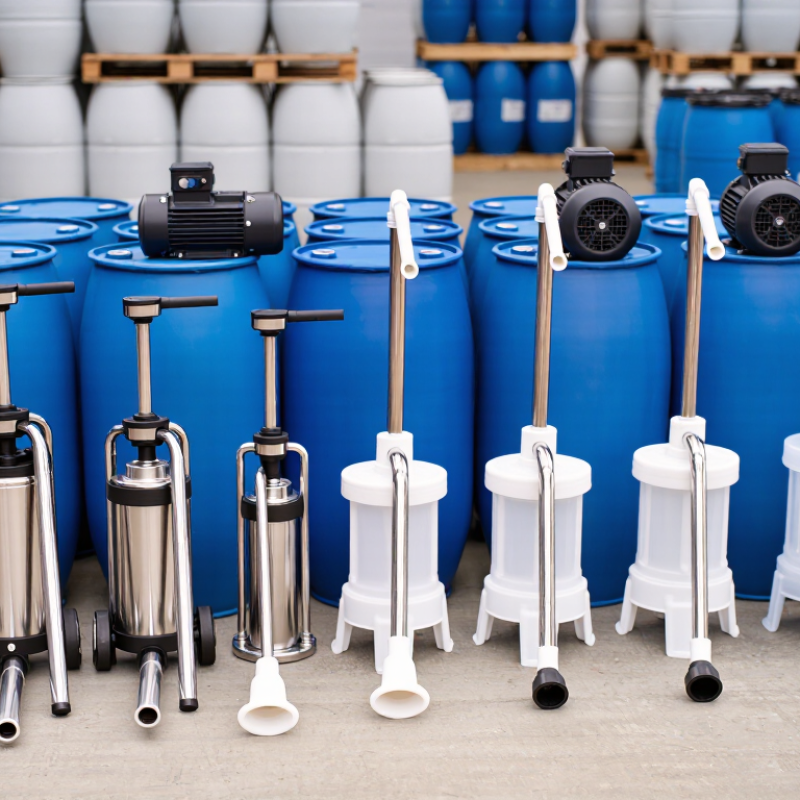
Determine the Fluid and Its Compatibility Requirements
Before choosing a 55 gallon barrel pump, identify the exact fluid you need to transfer. Check its label and safety data sheet. Is it water-based, oily, acidic, or solvent-based? Everyday descriptions can hide important differences. Record its concentration, temperature, and any additives. A cool, dilute solution may affect pump materials differently from a warm, concentrated one. Small details matter.
Check every part that touches the fluid, not just the pump tube. The rotor, seals, gaskets, and discharge fittings also need compatible materials. Some corrosive fluids can damage metal, while certain solvents can swell or soften elastomer seals. Thick liquids may also require a pump designed for higher viscosity. Compatibility charts are useful, but confirm that they cover the specific fluid and operating conditions. If information is unclear, consult the fluid supplier or pump manufacturer rather than guessing.
A common mistake is treating “plastic” or “stainless steel” as a complete compatibility answer. Material grades and seal compounds vary. I would pause over that detail, even when a pump looks suitable on paper. A small sample test may seem reassuring, but it cannot replace verified compatibility data or suitable handling procedures.
| Fluid or Service | Initial Wetted-Material Options | Key Compatibility Checks | Barrel Pump Selection Considerations |
|---|---|---|---|
| Water and neutral aqueous solutions | Polypropylene (PP), PVC, or 316 stainless steel (316 SS), depending on cleanliness and service conditions. | Check for dissolved salts, treatment chemicals, temperature, and any requirements for product purity. | Confirm the pump’s flow rate, discharge arrangement, and whether the fluid contains particles. |
| Dilute mineral acids For example, dilute hydrochloric or sulfuric acid |
PP or PVDF may be suitable for some formulations; 316 SS is not suitable for every acid concentration or service condition. | Identify the exact acid, concentration, temperature, and exposure time. Check the tube, impeller, seals, and gaskets individually. | Do not select by fluid name alone. Confirm compatibility against a chemical-resistance chart or with the pump supplier. |
| Sodium hypochlorite solutions Bleach |
PP or PVDF may be appropriate for specific concentrations and temperatures. | Concentration and temperature affect material life. Chloride-containing bleach can cause corrosion or pitting in stainless steel. | Verify seal compatibility and avoid assuming stainless steel is suitable just because the fluid is water-based. |
| Caustic solutions Sodium hydroxide or potassium hydroxide |
PP or other chemically resistant plastics may be suitable for some conditions; suitability varies by concentration and temperature. | Check concentration, temperature, and all elastomers. Some metals and seals may be unsuitable for particular conditions. | Specify the exact solution and operating temperature when requesting a compatibility confirmation. |
| Organic solvents For example, acetone or alcohols |
Material suitability is solvent-specific; some plastics, metals, and seal compounds may be incompatible. | Check chemical resistance, swelling, permeation, temperature, and seal compatibility for the exact solvent and concentration. | For flammable solvents, assess electrical classification, bonding and grounding, ventilation, and applicable site safety rules. |
| Oils and petroleum-based fluids | 316 SS may suit many services; plastics and seal materials must be checked for the specific oil or fuel. | Check for additives, aromatic content, temperature, and possible swelling or softening of polymer components. | Confirm viscosity and required flow rate; thicker fluids may need a pump designed for higher viscosity. |
| Viscous or particle-containing liquids | Choose wetted materials based on the liquid’s chemistry; select pump geometry based on viscosity and particle size. | Check solids concentration, particle size, abrasiveness, settling, and the potential for clogging or wear. | Confirm the pump is designed for the required viscosity and solids. A standard barrel pump may not be appropriate. |
| Material abbreviations: PP = polypropylene; PVC = polyvinyl chloride; PVDF = polyvinylidene fluoride; 316 SS = 316 stainless steel. Important: This table is an initial screening guide, not a compatibility guarantee. Confirm the exact fluid composition, concentration, temperature, exposure time, and every wetted component—including seals and gaskets—before choosing a pump. | |||
Related Posts
-
7 Best 55 Gallon Barrel Pumps for Global Buyers
-

10 Best Pneumatic Drum Pumps for Efficient Fluid Transfer?
-
2026 Top Choices for 55 Gallon Drum Transfer Pump Alternatives?
-
2026 Top 55 Gallon Drum Transfer Pump Reviews and Recommendations?
-
China Top Drum Hand Pump Manufacturers for Global Buyers
-
Top 2026 55 Gallon Pump Buying Guide for Global Suppliers?
 |

|
We're ready to help identify, size and spec your pumps, filters |