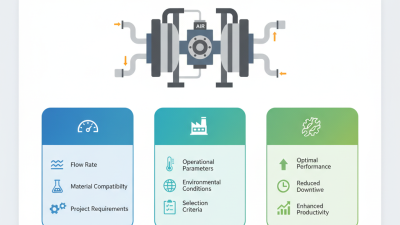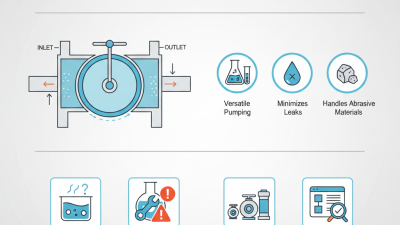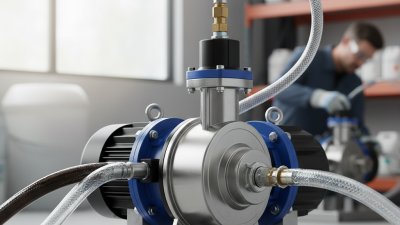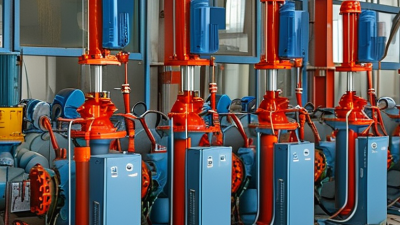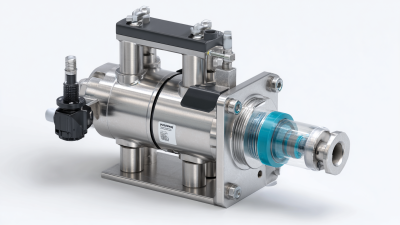
Choosing the right aod pump begins with the process, not the catalogue. A pump that handles water well may struggle with abrasive slurry, solvent, or thick sealant. Your fluid decides the materials, diaphragm design, air valve, and connection size.
The U.S. Department of Energy reports that compressed air can represent roughly 10% of industrial electricity use. Its Improving Compressed Air System Performance sourcebook also identifies substantial savings from reducing leaks, pressure, and inefficient demand. This matters because an aod pump converts compressed air into fluid movement. A low purchase price may become expensive when the pump consumes excessive air every hour. Listen to the compressor.
Industrial pump selection guidance from the Hydraulic Institute emphasizes duty point, fluid properties, system resistance, and lifecycle cost. These principles apply directly to an aod pump. Check required flow, discharge pressure, viscosity, temperature, solids size, and chemical compatibility. Then examine air consumption at the actual operating point, not only the maximum rating. Consider pulsation, noise, dry-running tolerance, maintenance access, and available spare parts. In regulated facilities, verify applicable material, grounding, and installation requirements with qualified personnel.
No single model fits every application. That is easy to forget. Real installations often reveal imperfect assumptions: the fluid thickens during winter, the suction hose collapses, or the compressor cannot maintain pressure during peak demand. A careful selection process includes field measurements, supplier documentation, and a practical trial. Reliable decisions come from evidence, not impressive flow numbers alone.
Choosing an air-operated double-diaphragm (AOD) pump starts with the fluid, not the pump casing. Identify its viscosity, solids content, chemical behavior, and sensitivity to shear. A thin cleaning liquid may move easily, while thick resin can reduce actual flow sharply. Ask whether particles are soft, abrasive, or likely to settle. This detail affects diaphragm material, valve design, and port size. I have seen projects fail because “water-like” was treated as a complete fluid description. It is not.
Record required flow in litres per minute under real operating conditions. Then record discharge pressure, suction lift, pipe length, fittings, and elevation changes. A pump rated for a target flow may deliver less when the line contains several elbows or a restrictive filter. Measure the minimum and maximum demand, rather than using one convenient number. Keep a margin, but do not oversize blindly; excessive air consumption and cycling can create new problems. Short tests help.
Temperature needs equal attention. Note normal, startup, cleaning, and upset temperatures, because elastomers and housing materials respond differently across that range. Confirm whether the fluid temperature changes viscosity or creates vapor pressure concerns. Use a written duty profile and compare it with verified pump curves and material data. An experienced technician should review the assumptions. I still revisit them after commissioning, since field conditions often expose missing details.
How to Choose the Best AOD Pump for Your Application?
An air-operated double-diaphragm pump must match the fluid, not merely the flow rate. I start with concentration, temperature, solids, viscosity, and cleaning chemicals. Pump wetted parts need separate evaluation. Polypropylene handles many corrosive liquids, while PVDF offers stronger chemical resistance. Stainless steel suits oils, solvents, and higher mechanical loads. However, compatibility charts are not final answers.
Diaphragm selection can change service life dramatically. PTFE resists aggressive chemicals and high-purity fluids, but it may flex less efficiently. EPDM performs well with water-based fluids, caustics, and many cleaning solutions. NBR often suits petroleum-based fluids. FKM can tolerate many hydrocarbons, although temperature and chemical concentration still matter. I have seen a suitable diaphragm fail after exposure to a cleaning mixture that was omitted from the original specification. Small details matter.
The U.S. Department of Energy’s Pumping System Assessment Tool identifies pumping systems as roughly 27% of industrial motor energy use. Efficient air use therefore deserves attention, even with pneumatic equipment. Industry analysis from Grand View Research also identifies chemical processing as a major diaphragm-pump application. Check actual duty cycles, not only catalog ratings. ASTM D543 provides a useful framework for evaluating plastic resistance to chemical reagents. A short immersion test at operating temperature can reveal swelling, softening, or cracking. It is slower than trusting a chart. It is usually wiser.
How to Choose the Best AOD Pump for Your Application?
Select the Air-Operated Double-Diaphragm Pump Size and Configuration
Choosing an AOD pump starts with the real process conditions, not the pipe size alone. Define the required flow rate, discharge pressure, suction lift, fluid temperature, and solids content. A pump that looks correctly sized may struggle when the liquid becomes thicker or colder. Allow practical capacity margin, but avoid excessive oversizing. Large pumps can cycle slowly and waste compressed air.
Diaphragm and valve materials must match the fluid’s chemical properties. Consider abrasion, temperature, viscosity, and any suspended particles. Flexible diaphragms suit many transfer duties, while reinforced options may handle demanding cycles better. Port size and orientation also affect installation. Check whether the pump can drain fully and whether the inlet path remains short. Small details matter here. In field installations, poor suction piping often causes more trouble than the pump itself.
Tips: Compare the pump’s performance curve with your actual air pressure and flow demand. Do not rely only on maximum ratings. Measure available air at the pump, especially when several machines share one compressor. Review the duty cycle, noise level, maintenance access, and expected diaphragm life. A clean calculation can still mislead. Recheck it against real operating records, because process conditions rarely stay perfectly stable.
| Selection Dimension | Typical Options or Range | Recommended Selection Guidance | Application Considerations |
|---|---|---|---|
| Required Flow Rate | Approximately 0.5 to 1,200 L/min, depending on pump size, air pressure, liquid viscosity, and discharge head | Select a pump whose rated flow exceeds the normal operating requirement by about 10% to 20%, while checking the performance curve at the actual discharge pressure. | Do not size the pump using free-air flow or maximum catalog capacity alone. Actual flow decreases as discharge pressure, liquid viscosity, suction lift, or piping resistance increases. |
| Pump Size and Port Connection | Common process connections range from approximately 6 mm to 100 mm (1/4 in to 4 in) | Choose the smallest pump that can provide the required flow without excessive air consumption or high fluid velocity. | Larger ports generally reduce friction loss and allow higher flow. Confirm the connection standard, such as threaded, flanged, sanitary, or hygienic fittings. |
| Discharge Pressure | Typically up to approximately 7 to 8 bar (100 to 120 psi), subject to the pump design and diaphragm material | Verify that the maximum discharge pressure is greater than the system pressure, including static head, friction loss, and any backpressure. | An AOD pump can stall when discharge pressure approaches the available air pressure. The air supply must be capable of overcoming the liquid-side pressure. |
| Air Supply Pressure | Common operating range: approximately 2 to 7 bar (30 to 100 psi) | Select a pump compatible with the available plant-air pressure and use a filter-regulator near the pump. | Clean, dry, regulated air improves reliability. Excessively high air pressure can increase diaphragm wear, noise, and operating cost. |
| Liquid Viscosity | Suitable for low-viscosity liquids and many viscous fluids; practical performance depends strongly on pump size and piping layout | For viscous liquids, choose a larger pump, reduce suction-lift requirements, use short large-diameter suction piping, and confirm the flow curve for the actual viscosity. | High viscosity reduces flow and increases air consumption. Avoid undersizing the suction line because it can cause slow filling, cavitation-like symptoms, or diaphragm cycling problems. |
| Solids Handling | Some models can pass suspended solids from a few millimeters to approximately 25 mm, depending on port size and valve design | Select a pump with a published maximum solids-passage rating greater than the largest particle in the liquid. | Soft or deformable solids may pass more easily than hard particles. Consider a strainer only when it will not restrict suction flow or become blocked during operation. |
| Diaphragm Material | Common options include PTFE, thermoplastic elastomers, nitrile rubber, EPDM, and fluoroelastomer compounds | Choose the diaphragm according to chemical compatibility, temperature, abrasion, permeation, and required service life. | PTFE is commonly selected for aggressive chemicals and high-purity duties. Elastomeric diaphragms may offer better flexibility and abrasion resistance for general industrial liquids. |
| Valve Ball and Seat Material | Common materials include PTFE, elastomers, polypropylene, stainless steel, and other engineered plastics | Match the ball and seat materials to the liquid chemistry, solids content, temperature, and required leak-tightness. | Ball and seat wear can reduce efficiency and cause backflow. For abrasive liquids, select materials and designs intended for abrasion resistance. |
| Pump Body Material | Typical choices include polypropylene, conductive or reinforced plastics, aluminum, stainless steel, and specialty alloys | Use plastic bodies for many corrosive chemical services and metal bodies where mechanical strength, temperature capability, or impact resistance is important. | Confirm compatibility with the liquid, ambient conditions, grounding requirements, and any applicable hygienic or hazardous-area requirements. |
| Liquid Temperature | Often approximately -20 to 120 °C, depending on body, diaphragm, ball, seat, and seal materials | Base the selection on the lowest and highest continuous operating temperature, including cleaning or sterilization cycles. | The allowable temperature is limited by the least temperature-resistant wetted component. Always check the manufacturer’s material-specific temperature rating. |
| Suction Lift | Self-priming capability is common; practical suction lift may range from approximately 3 to 8 m depending on liquid and operating conditions | Minimize suction lift where possible and select a larger pump for difficult suction conditions or viscous liquids. | Dry suction lift, flooded suction, liquid viscosity, hose flexibility, and foot-valve restrictions all affect priming performance and available flow. |
| Air Consumption | Commonly expressed as normal cubic meters per hour or standard cubic feet per minute; varies with flow, discharge pressure, and pump efficiency | Check air consumption at the actual operating point rather than relying on maximum-flow data. | Air demand can be significant in continuous-duty service. A larger, slower-running pump may reduce cycling and improve total operating efficiency. |
| Flow Control | Flow can be adjusted by regulating air pressure, air flow, or a suitable discharge-side control valve | Use a regulator and air-flow control valve to set the desired rate without forcing the pump to operate continuously at its maximum capacity. | Do not restrict the suction side to control flow. Suction throttling can cause starvation, unstable operation, and premature diaphragm failure. |
| Continuous or Intermittent Duty | Suitable for many intermittent and continuous-transfer duties when correctly sized | For continuous operation, select materials and a pump size that can meet the duty cycle without excessive cycling frequency. | High cycle rates may increase diaphragm and valve wear. An air controller, pulsation dampener, or larger pump can help stabilize the process. |
| Pulsation Management | Reciprocating diaphragm pumps naturally produce pulsating flow | Add a pulsation dampener when the process requires smoother flow, accurate metering, or reduced vibration. | Support piping independently, use flexible connectors where appropriate, and verify that the dampener material is compatible with the pumped liquid. |
| Hygienic or High-Purity Service | Available configurations may include polished stainless-steel wetted parts and sanitary connections | Specify cleanable geometry, suitable surface finish, drainability, and the required cleaning or sterilization procedure. | Confirm whether the application requires sanitary certification, elastomers suitable for the process, or compliance with food, pharmaceutical, or bioprocess standards. |
| Hazardous or Flammable Service | Pneumatic drive can be suitable where electric-drive equipment is undesirable, subject to site requirements | Choose conductive materials and grounding provisions where static electricity may be generated by the liquid or pump operation. | Conduct a complete area-classification and risk assessment. The pump alone does not determine the safety of the entire installation. |
| Installation Orientation | Many AOD pumps can be installed in various orientations, subject to the design and piping arrangement | Install with accessible air and fluid connections, adequate support, and a layout that allows draining and maintenance. | Avoid unsupported piping loads on the pump body. Ensure the suction line is airtight and appropriately sized for the required flow. |
| Maintenance Requirements | Routine service commonly includes inspection or replacement of diaphragms, balls, seats, seals, and air-valve components | Select a configuration with readily available wear parts and straightforward access for planned maintenance. | Frequent failures may indicate incorrect material selection, excessive cycle rate, contaminated air, blocked suction piping, or operation beyond the pump curve. |
Selection note: Final pump sizing should be based on the required flow, total dynamic head, liquid temperature, viscosity, solids content, chemical compatibility, air availability, duty cycle, and the manufacturer’s performance curve. The ranges shown are general industry guidance and may vary by pump design and configuration.
Choosing an air-operated double-diaphragm pump starts with the air bill, not the catalog flow rate. In field trials, two pumps can deliver similar output while consuming very different air volumes. Ask for tested air consumption at your actual flow, pressure, fluid viscosity, and hose length. A published peak figure is useful, but it rarely predicts daily operation. Measure it.
Efficiency depends on matching pump size to demand. An oversized unit may cycle slowly, waste compressed air, and create unnecessary pulsation. An undersized unit can run continuously, increasing wear and reducing output. Check the compressor’s usable capacity, including losses through filters, regulators, valves, and long piping. A pressure gauge near the pump gives better evidence than a remote compressor reading. This small detail often changes the selection.
Maintenance should be judged by access, part count, and service frequency. Inspect diaphragm and valve condition, then record cycle time, leakage, and air pressure. Simple access matters during a night shift. Operating cost includes electricity for compression, replacement parts, downtime, and fluid loss. A cheaper purchase can become expensive after months of inefficient operation. Still, efficiency claims need skepticism. Real fluids contain solids, temperature shifts, and awkward installation constraints. Test the pump under representative conditions before approval, and document what the test missed.
How to Choose the Best AOD Pump for Your Application?
Safety verification should begin before comparing flow rates. Check compliance with ISO 12100 for risk assessment and ISO 4414 for pneumatic system safety. In hazardous areas, confirm the complete installation against applicable IEC 60079 requirements. The pump may be non-electric, yet static discharge, compressed air failure, and chemical exposure still matter. OSHA’s machine safety guidance also emphasizes guarding, energy isolation, and documented procedures. Do not trust a certificate without checking its scope, revision, and operating limits.
Installation details often decide whether an AOD pump performs reliably. Confirm air pressure, air volume, suction lift, pipe diameter, and fluid compatibility. A narrow suction hose can create cavitation-like starvation and unstable flow. Add grounding where required. Use a filter-regulator-lubricator only when the pump manufacturer permits it. The U.S. Department of Energy’s Compressed Air Sourcebook reports that compressed air can consume 10–30% of industrial electricity. Small air leaks can become expensive. I have seen specifications look correct, yet poor pipe routing caused repeated stoppages.
Supplier support should include drawings, material certificates, maintenance intervals, spare-part availability, and commissioning guidance. Ask for documented response times. Also request a realistic air-consumption curve, not only a maximum flow figure. A 2023 global maintenance survey by Plant Engineering reported that unplanned downtime remains a major operational concern for manufacturers. That finding is practical, but not universal. Your process may need different evidence. Test the pump with your actual fluid, temperature, and discharge pressure before final approval.
Use this practical screening model to compare AOD pump options. Safety standards and application compatibility should receive the greatest weight, followed by installation requirements and supplier support.
Selection guidance: Verify hazardous-area requirements such as ATEX or IECEx where applicable, confirm chemical compatibility and required flow, check air supply and mounting constraints, and assess the supplier’s documentation, spare-parts availability, and technical support.
![]() |
Need Help? Call Us 203-740-1877
|
We're ready to help identify, size and spec your pumps, filters |
Pumps, Parts, and Equipment – Guidance Included
103 Hempel Drive
Wolcott, CT 06716
Telephone: 203-740-1877
Toll Free Fax: 866-523-1693
Email: sale@rewritertool.com