How to Choose the Best Deck Boards for Your Project
Choosing the right Deck Boards shapes how your outdoor space looks, feels, and performs over time. A sunny, exposed deck faces different demands than a shaded porch or a small balcony. The best choice depends on your climate, budget, maintenance habits, and the structure beneath the boards. Start there. Not with color alone.
Wood offers familiar warmth and can be cut or repaired with common tools, but it often needs regular cleaning, sealing, or staining. Composite boards can reduce routine upkeep, though their cost, surface feel, heat retention, and installation requirements vary by product. Neither option is perfect. Even a beautiful sample may look different across a full deck, and a low-maintenance surface still needs care. That part is easy to underestimate.
Before comparing products, check the manufacturer’s installation instructions and confirm that your framing, fasteners, and board spacing are compatible. Ask how the material handles moisture, direct sun, and seasonal temperature changes where you live. If possible, inspect full-size samples outdoors at different times of day. Small details matter: a damp step, a hot surface under bare feet, or a board that shows dirt quickly. They can change your decision.
This guide explains the main board materials, their practical trade-offs, and the questions worth asking before you buy. It cannot choose for every home. Your priorities may shift once you compare real samples and long-term costs. That is a useful moment to pause and reconsider. Aim for a deck that suits your space and your willingness to maintain it, not just the trendiest finish.
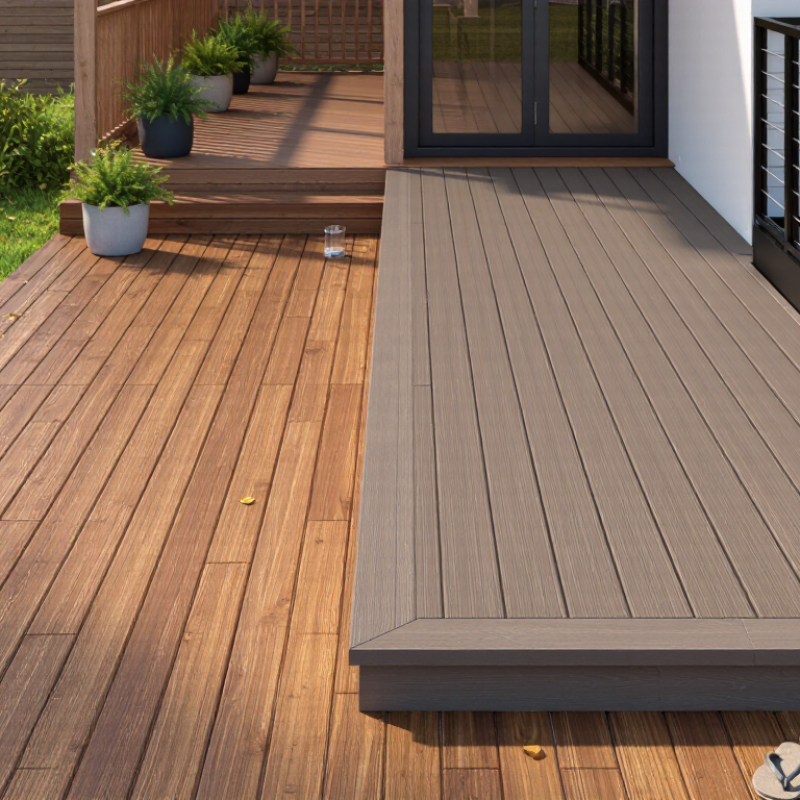
Define Your Deck’s Purpose, Layout, and Performance Needs
Before comparing deck boards, decide how the deck will actually be used. A quiet spot for two chairs has different demands from a dining area with regular foot traffic. Note where people will walk, where furniture will sit, and whether children or pets will use the space. Measure the footprint and mark stairs, doors, and fixed posts. These details affect board direction, cuts, and the amount of material needed.
Think about local weather and maintenance, too. A shaded deck may stay damp longer, while a sunny one can become hot underfoot. If wet shoes are common, prioritize a surface that offers dependable traction and drains well. Check the board manufacturer’s installation guidance for joist spacing, fastening, and ventilation requirements; these can vary by material. Small details matter.
Sketch the layout before choosing a board profile. Long, uninterrupted runs can reduce seams, but the longest boards may be harder to carry and position. Picture where end joints will land, especially around steps and seating areas. I’ve seen neat plans become awkward when a post interrupts a board pattern. Revise the sketch if needed. It is easier on paper. Consider the upkeep you can realistically manage, not just the finish you like on a sample. A slightly imperfect plan, tested against daily use and site conditions, is usually more useful than a polished plan built on assumptions.
Compare the Main Deck Board Materials
Pressure-treated pine is often the lowest-cost starting point, but it needs regular cleaning, sealing, and checks for splinters. Cedar offers a warmer grain and natural decay resistance, though sunlight can fade its color. Both are real wood, so moisture matters. The USDA Forest Products Laboratory’s Wood Handbook reports equilibrium moisture content near 6% at 30% relative humidity and about 12% at 65%, at roughly 70°F. That movement can loosen fasteners or open small gaps. Leave proper spacing. It matters.
Composite boards combine wood fibers and recycled plastic, reducing routine staining and painting. They can feel hotter under direct sun, and surface scratches may be difficult to disguise. PVC boards contain no wood fiber and resist moisture, but their plastic appearance and higher upfront price do not suit every home. The 2024 Cost vs. Value report estimated a typical wood deck addition at $17,615 and a composite deck at $24,206; local labor and site conditions can shift both figures considerably. Those estimates compare project costs, not board performance over decades. For a shaded, damp yard, low-maintenance boards may be worth the premium. For a sunny deck where bare feet matter, test a sample outside first. It is easy to overvalue a perfect-looking sample. Real boards weather.
Select Board Dimensions, Profiles, and Surface Textures
How to Choose the Best Deck Boards for Your Project
Select Board Dimensions, Profiles, and Surface Textures
Board dimensions affect both the deck’s appearance and its feel underfoot. Wider boards create fewer seams, but they can show more movement as moisture changes. The USDA Forest Products Laboratory’s Wood Handbook reports average green-to-oven-dry shrinkage of about 7% tangentially and 4–5% radially across many wood species. Those are broad averages, not a guarantee for any board. Check the species, grade, and manufacturer’s installation guidance before choosing a width. A detail easy to miss.
Profiles matter too. Square-edge boards suit face-fastened layouts and visible screw lines; grooved edges accept hidden fasteners for a cleaner surface. Match board thickness to the joist spacing and the applicable span guidance, rather than assuming every profile can bridge the same distance. The American Wood Council’s Prescriptive Residential Wood Deck Construction Guide includes decking-span tables based on board size and grade. Check the table for your actual material. Small mismatch, big bounce.
Texture changes traction, cleaning, and the way light falls across the deck. Fine grooves may collect dirt; heavily ridged surfaces can feel rough on bare feet. Compare samples outdoors, where rain and glare reveal more than a showroom does. A textured surface is not automatically slip-proof, and I’d be wary of choosing by appearance alone. Decide how the deck will be used, then weigh comfort, maintenance, and the maker’s care instructions.
Evaluate Durability, Maintenance, and Lifetime Cost
Deck boards face different demands depending on sun, rain, foot traffic, and nearby trees. Pressure-treated wood often costs less upfront, but it may need regular cleaning and sealing. Naturally rot-resistant wood can reduce some concerns, though it still weathers and may need care. Composite boards usually need less routine coating, but can become hot in direct sun or show scratches. No material suits every yard.
Tips: Ask what maintenance the board needs in your climate. Check a sample outdoors at midday; color and heat can feel different in a showroom. Read care instructions before comparing prices.
Estimate lifetime cost, not just the price per board. Include framing compatibility, fasteners, installation, cleaning products, and likely repairs. A lower-cost board may become expensive if upkeep is frequent or replacement comes sooner than expected. Conversely, a higher initial price does not guarantee a trouble-free deck. Check warranty terms carefully, since coverage may depend on installation and maintenance. I would also leave room for uncertainty: actual service life varies with drainage, shade, ventilation, and how the deck is used. A damp corner beneath a planter can age differently from a sunny, open walkway.
Confirm Compatibility with the Frame and Installation Plan
Before choosing deck boards, measure the frame and confirm joist direction, spacing, and condition. The USDA Forest Products Laboratory’s Wood Handbook reports wood’s fiber saturation point is typically around 25–30% moisture content. Below that point, moisture changes can affect board dimensions, so account for seasonal movement and the board maker’s recommended gaps. Fit matters. Check for soft spots or uneven joists before placing an order.
The American Wood Council’s Prescriptive Residential Wood Deck Construction Guide (DCA 6) treats decking thickness, joist spacing, and span as connected design factors. Match the selected board’s support requirements to the actual frame, rather than assuming standard spacing will work. Composite, PVC, and solid wood boards may need different fasteners, edge clearances, or ventilation. A good color match cannot fix an incompatible installation plan.
Sketch the layout and mark seams, borders, stairs, and drainage paths before cutting. Confirm that each joint lands on supported framing; add blocking where the plan requires it. Check fastener compatibility, too. This step is easy to rush, but it can prevent awkward gaps and rework. Recheck the first row’s alignment before fastening the rest. Small errors travel.