How to Choose the Right Small Diaphragm Pump

Choosing the right small diaphragm pump is a practical engineering decision, not a catalog exercise. A mismatch may show up as slow filling, pulsing flow, noisy operation, or premature diaphragm wear. Start with the real duty: required flow and pressure, fluid compatibility, viscosity, temperature, and how often the pump must run. Small details matter. A narrow tube or clogged filter can change performance at the outlet.

The U.S. Department of Energy and Hydraulic Institute’s Improving Pumping System Performance sourcebook stresses evaluating pumps within their complete systems. That guidance is relevant to compact pumps, too: rated flow alone cannot predict performance after tubing, fittings, valves, and operating conditions are considered. Compare manufacturer curves at your intended pressure, and check materials against the fluid’s composition. For dosing, verify repeatability; for portable equipment, include power draw, noise, and mounting space. Ask suppliers for test conditions behind their published figures. A clean-looking specification sheet is not enough.

Machinery reliability expert Heinz P. Bloch’s work emphasizes matching equipment to actual operating conditions. A concise paraphrase of that principle is: “Choose for the real duty, not the catalog headline.” This is a paraphrase, not a verbatim quotation. It offers a useful starting point, but it cannot replace application-specific testing. Record the fluid, target flow, pressure, duty cycle, and available power before comparing models. Then check whether the pump can maintain performance as conditions change. That small step can prevent a costly mismatch.
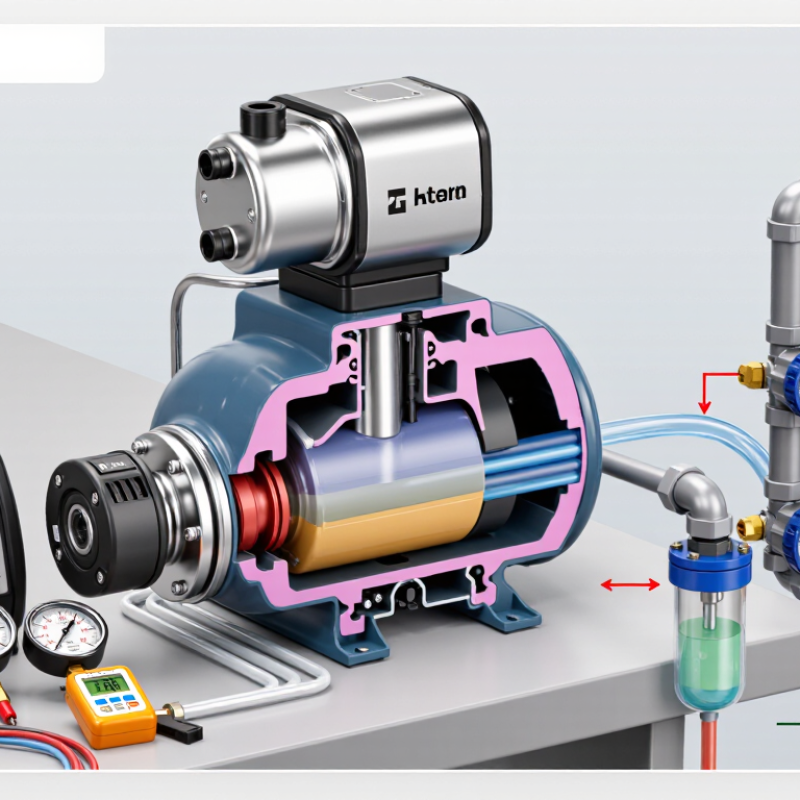
How to Choose the Right Small Diaphragm Pump

Set Flow and Pressure Targets: 1 bar Equals 100 kPa

Choosing a small diaphragm pump starts with two targets: required flow and outlet pressure. One bar equals 100 kPa, so a 1.5-bar target equals 150 kPa. Keep units consistent when comparing gauges, pump data, and system drawings. Small errors add up. Maximum pressure and rated flow are often separate limits, not one operating point. Check the performance curve for the flow you actually need. A short, wide tube creates less resistance than a narrow hose. Filters, valves, and elevation also change the result. Resistance matters.

Write down the flow required at the point of use, not only at the pump outlet. Estimate pressure losses through tubing, fittings, and filters. Raising water 10 metres takes roughly 1 bar, before friction losses. Treat that as an estimate, not a final measurement. Numbers can mislead. Leave a practical margin, but do not oversize blindly; excess pressure may increase noise, wear, and power use. If possible, test with the actual fluid and tubing. Record flow and pressure together. A gauge at the pump may not reveal a pressure drop at the nozzle. This step is easy to rush, so check the figures again after installation.

Check Fluid Properties: Water Is About 1 mPa·s at 20°C

How to Choose the Right Small Diaphragm Pump

Water provides a useful viscosity benchmark. At 20°C, its dynamic viscosity is about 1.002 mPa·s. The International Association for the Properties of Water and Steam reports a value of 1.0016 mPa·s under its reference conditions. Check the actual fluid temperature: viscosity can change noticeably as liquids cool or warm.

A pump selected for water may struggle with a thicker liquid. Higher viscosity can increase flow resistance and make suction more demanding. The result may be slower filling, reduced flow, or inconsistent delivery. Check the pump’s performance data against the fluid’s viscosity, temperature, and required flow rate. Don’t rely on water ratings alone.

Get specific. Read the fluid’s technical data sheet, and confirm whether its viscosity is reported in mPa·s or cP; those units are numerically equivalent. If the liquid varies by batch, measure it near the operating temperature. A small bench test can reveal problems before installation. It is tempting to treat viscosity as the whole story, but that shortcut misses tubing, fittings, and suction lift. I would check those too.

Read Pump Curves: Confirm Flow at Working Pressure, Not Free Flow

How to Choose the Right Small Diaphragm Pump

Free-flow is not your operating flow. It is measured with little or no resistance, often with the outlet open. In a real installation, tubing, filters, valves, and the destination all add pressure. Read the pump’s pressure-flow curve at your actual working pressure. The U.S. Department of Energy’s Improving Pumping System Performance: A Sourcebook for Industry (2006) explains why pump performance must be matched to system demand. Check the test conditions, too: voltage, fluid, and pump speed can change the result.

Use the curve to compare practical values, not headline maximums. For example, an illustrative curve might show 1.0 L/min at zero pressure but only 0.65 L/min at 2 bar. That difference can matter when filling a small vessel or feeding a narrow tube.

Small details matter. Allow margin for added restrictions, and confirm whether the stated pressure is gauge or absolute. Ask for measured flow at your duty point if the curve is unclear. One common mistake is choosing a pump by free-flow rate alone; I have seen a tidy bench result disappoint once long tubing is installed. Recheck the flow in the assembled setup.

Match Wetted Materials and Seals to Chemical and Temperature Limits

A small diaphragm pump can look suitable on paper and still fail at its wetted surfaces. Check the fluid, concentration, temperature, and exposure time—not just the pump body. A solvent that barely affects a seal at room temperature may soften it when hot. Also inspect valve seats, diaphragms, and O-rings; one incompatible component can cause swelling, leakage, or loss of prime. Small details matter.

Use compatibility charts as screening tools, not guarantees. ISO 175:2010 describes immersion testing for plastics and tracks changes such as mass, dimensions, and properties. ASTM D471 provides a similar framework for rubber exposed to liquids. Ask suppliers for test data matching your actual chemical and temperature conditions. A generic “chemical resistant” label leaves too much unsaid. Check both continuous and peak temperatures, including heat generated during operation.

Tips: Request wetted-material and seal specifications, then compare them with the fluid’s safety data sheet and operating range. If the mixture, temperature, or cleaning cycle changes, reassess the selection. For critical service, test a sample seal in the real fluid. It takes time, but a chart alone may miss the problem.

How to Choose the Right Small Diaphragm Pump - Match Wetted Materials and Seals to Chemical and Temperature Limits
Wetted Pump Body Diaphragm / Seal Material Typical Chemical Fit Illustrative Continuous Operating Range Key Limits and Selection Notes
Polypropylene (PP) EPDM Water, many dilute acids and alkalis, and some aqueous cleaning solutions. Approximately 0 to 80 °C (32 to 176 °F) EPDM is generally unsuitable for petroleum oils and many hydrocarbon fluids. Check compatibility with concentrated oxidizers, solvents, and the exact chemical concentration.
Polyvinylidene fluoride (PVDF) PTFE Many acids, halogen-containing chemicals, and corrosive aqueous solutions. Approximately 0 to 100 °C (32 to 212 °F) PVDF often offers broader chemical resistance than PP, but compatibility depends on concentration and temperature; hot strong alkalis can be a concern. The pump’s rated temperature may be lower.
316L stainless steel PTFE Many solvents, oils, and process fluids where metal construction is appropriate. Approximately 0 to 120 °C (32 to 248 °F) Chlorides and hydrochloric acid can cause corrosion or pitting in stainless steel. PTFE has broad chemical resistance, but the body, fittings, and other wetted components still need checking.
316L stainless steel FKM (fluoroelastomer) Many oils, fuels, and hydrocarbon-based fluids. Approximately 0 to 120 °C (32 to 248 °F) FKM compatibility varies by formulation and is often poor with ketones, amines, and hot water or steam. Confirm that both the seal and metal are suitable for the fluid.
Polypropylene (PP) PTFE Aqueous chemicals where PP is compatible and an elastomer seal is not preferred. Approximately 0 to 80 °C (32 to 176 °F) PTFE can resist many chemicals, but it does not make an incompatible PP pump head chemically suitable. Check the complete wetted path, including valves and connections.
PVDF or compatible metal body Silicone Some water-based fluids and applications requiring a flexible, low-temperature elastomer. Approximately 0 to 80 °C (32 to 176 °F) Silicone is generally a poor choice for many oils, fuels, and hydrocarbon solvents. Its temperature capability and mechanical life depend on the specific pump design and fluid.
Selection note: Temperature ranges are illustrative operating windows, not universal material ratings. The allowable limit is set by the pump’s complete construction and may be lower than the limit of any individual material. Verify the exact chemical, concentration, temperature, pressure, and exposure conditions against the pump manufacturer’s compatibility data before use.

Verify Voltage, Duty Cycle, IP Rating, Noise, and Maintenance Needs

Match the pump’s voltage to the supply, including AC or DC, frequency, and allowable variation. A mismatch can cause poor starting or overheating. Check the duty cycle against real run times, pressure, and ambient temperature; “intermittent” may not fit a pump expected to run all shift. Leave margin. A spec sheet rarely captures every start-stop cycle.

Choose an IP rating for the actual exposure, not a vague idea of “waterproof.” IEC 60529 classifies protection against solids and water; dust, splashes, and washdown call for different levels. Measure noise where people work. NIOSH’s 1998 occupational-noise criteria recommend an 85 dBA eight-hour time-weighted exposure limit, a useful screening benchmark rather than a pump-specific guarantee. Small pumps can still sound sharp in a hollow cabinet. Check service access, diaphragm and valve replacement, filter cleaning, and spare-part availability. A tidy specification can mislead; maintenance intervals depend on fluid, pressure, and operating hours. Record those conditions during a trial, then revisit the choice.