
Choosing a Vibratory Dryer in 2026 requires more than comparing motor power, capacity, and purchase price. The right machine must protect the product while delivering stable moisture, manageable energy use, and consistent throughput. A dryer that performs well with granules may struggle with fragile crystals, sticky powders, or heat-sensitive materials.
Professor Arun S. Mujumdar, a leading authority on drying technology, has stated, “Drying is one of the oldest and most common unit operations.” His observation remains highly relevant. Drying technology is familiar, but product behavior is rarely simple. A small change in particle size can alter residence time, airflow, and final moisture. Laboratory results may also look better than factory performance.
Begin with the material. Record its inlet moisture, target moisture, bulk density, temperature limit, and tendency to agglomerate. Then examine the operating environment. A dusty plant may need improved sealing and filtration. A corrosive product may require special contact materials. A limited floor area can influence the dryer’s length, discharge design, and maintenance access.
Do not ignore vibration characteristics. Amplitude and frequency affect conveying speed, bed depth, and heat transfer. They also influence noise and mechanical wear. These details matter.
An attractive specification sheet is not proof of suitability. Pilot testing is wiser. Still, pilot data can mislead when feed conditions are unrealistically uniform. That weakness deserves attention. This guide explains how to compare dryer designs, question supplier claims, and select a Vibratory Dryer that fits real production conditions in 2026.
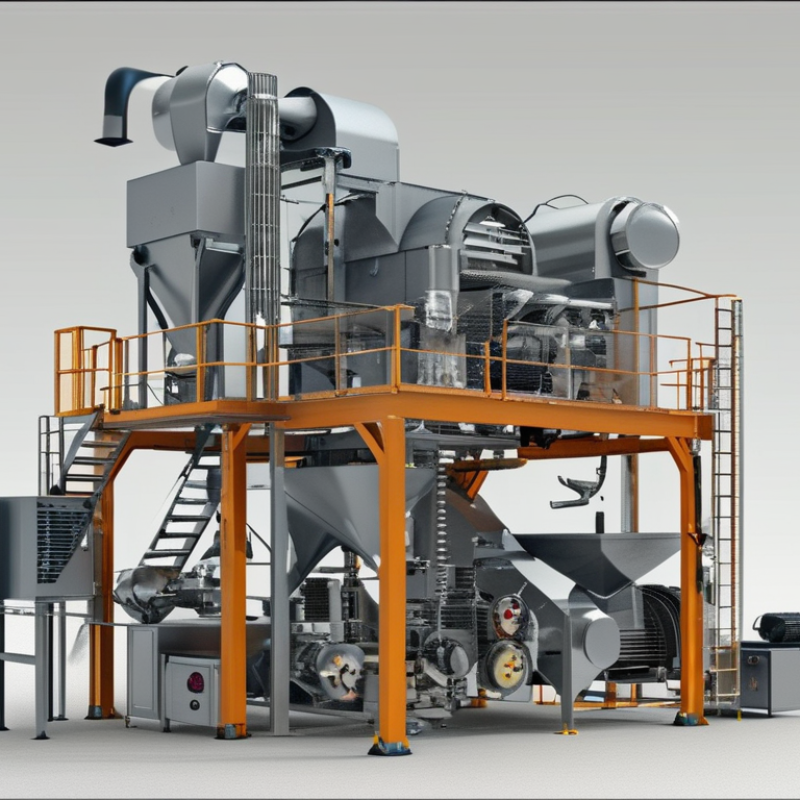
A vibratory dryer removes moisture while material moves across a vibrating surface. It is commonly used for granules, pellets, powders, and small components. Unlike a static tray dryer, it keeps product moving and exposes more surface area to heated air. The machine usually combines vibration, controlled airflow, and moderate temperature. That combination matters. It can dry evenly without excessive mechanical handling. Still, even drying depends on feed depth, particle size, and moisture variation.
Inside the chamber, an eccentric motor creates a steady oscillating motion. The vibration advances material along a perforated or solid deck. Warm air passes through or over the moving bed. Moisture leaves the particles, enters the air stream, and exits through an exhaust system. Operators adjust vibration intensity, air volume, residence time, and inlet temperature. A slower bed gives moisture more time to escape. Too much heat can damage sensitive material. Too little airflow can leave a damp core. I have found that small adjustments often outperform aggressive settings.
When choosing a vibratory dryer in 2026, check actual material behavior, not only rated capacity. Ask for trials using your own moisture range and target throughput. Measure outlet moisture at several points. Inspect cleanability, insulation, controls, noise, and maintenance access. A dryer that looks efficient may waste energy if air leaks around the bed. Easy to miss. I would also question optimistic drying claims. Real production rarely stays perfectly consistent.

Vibratory drying suits materials that can move freely without severe breakage. It works well with wet granules, crystals, pellets, flakes, and some coated particles. The vibration spreads material across a perforated surface, improving contact with heated air. A shallow, even bed matters. Sticky feed can bridge, smear, or form hard lumps. That problem is easy to underestimate.
Common applications include food ingredients, mineral products, fertilizer granules, ceramic particles, and formulated powders. Vibratory drying can provide steady moisture removal in continuous production lines. It is also useful when gentle handling matters more than maximum drying speed. For heat-sensitive solids, controlled air temperature can reduce surface damage. However, vibration does not replace proper airflow. Dense materials may need stronger air movement or a longer residence time. Materials with irregular shapes should be tested carefully.
When choosing a vibratory dryer in 2026, examine the material’s moisture level, particle size, bulk density, and flow behavior. Ask whether the product must remain intact, glossy, porous, or free-flowing. In my experience, the first trial is rarely perfect. Small changes in vibration frequency can affect residence time and product quality. Modern controls may track temperature, airflow, and outlet moisture continuously. These tools improve repeatability, but sensors can drift or respond slowly. A practical test should measure inlet and outlet moisture, product temperature, dust formation, and energy use. Thin feed layers often dry better, though they may reduce hourly capacity.
Which Materials and Applications Suit Vibratory Drying?
The chart shows an indicative suitability score for common material classes, based on their ability to form a controlled flowing bed, tolerate moderate mechanical movement, and achieve efficient contact with heated air. Granules, crystals, pellets, and free-flowing powders are generally strong candidates. Sticky, slurry-like, or highly fragile materials usually require pre-treatment or an alternative drying technology. Final selection should be confirmed through tests using the actual product, moisture load, particle size, temperature limit, and residence-time requirement.
Comparing vibratory dryer designs starts with the material, not the machine’s advertised capacity. Observe whether the product is fragile, sticky, dusty, or heat-sensitive. A continuous design suits steady production and consistent feeding. A batch configuration offers better control when recipes or moisture targets change frequently. In practice, the wrong choice often appears during discharge, when uneven drying creates wet pockets.
Examine the vibrating deck, screen opening, and airflow path together. A longer deck can increase residence time, but it may also require more floor space. Stronger vibration can improve movement, yet excessive force may damage delicate pieces. Check whether the dryer uses heated air from below, above, or both. Then compare temperature uniformity, cleanout access, insulation, and motor service points. I have found that easy inspection usually matters more than impressive laboratory capacity. A specification sheet can mislead.
Tips: Request a material trial using your real feed rate and moisture range. Measure inlet and outlet moisture at several deck positions. Ask operators to clean the unit after a normal shift. Note powder buildup, difficult corners, noise, and adjustment time. Do not ignore these details. They reveal practical performance. Also compare energy use per kilogram of evaporated water, not only installed motor power. Leave room for uncertainty; seasonal humidity and inconsistent feeding can change results. The “best” configuration may still need adjustment.
Choosing a vibratory dryer in 2026 starts with the feed, not the catalogue. Record feed rate, initial moisture, target moisture, particle size, bulk density, and heat sensitivity. Capacity stated in kilograms per hour can mislead when moisture changes. Ask for tests using your actual material. Small samples can expose sticking, clumping, or uneven drying. Do not trust a single best-case trial.
Vibration frequency and amplitude directly affect product movement and residence time. Adjustable settings provide better control than fixed operation. Check the usable residence-time range, not only the maximum capacity. Airflow volume, inlet temperature, and exhaust humidity also matter. Temperature uniformity is critical for heat-sensitive materials. Measure several points across the drying zone. One sensor may hide cold or overheated areas.
Select contact materials according to corrosion, cleaning, and contamination risks. Inspect weld quality, seals, inspection doors, and drainage points. These details influence sanitation and service life. Energy consumption should include heaters, fans, and vibration drives. Noise levels deserve attention in enclosed production areas. Controls should record temperature, airflow, vibration, and moisture results for each batch. I prefer clear data over impressive promises. Still, specifications alone cannot predict every issue. Leave capacity margin for seasonal moisture changes and future production growth. A dryer that runs slightly below its limit may deliver steadier results. That trade-off is easy to overlook.
A vibratory dryer should be judged by its full operating cost, not its purchase price. Energy use depends on feed moisture, material temperature, airflow, and residence time. Ask suppliers for measured power data under conditions close to your process. A laboratory test with your actual material is more useful than a general brochure figure. Small changes matter. A poorly insulated duct can waste heat every hour.
Maintenance deserves equal attention. Inspect the screen, springs, bearings, seals, and discharge area before purchase. Choose a design that allows quick access without moving heavy panels. Record expected replacement intervals and labor hours. A cheaper machine may become expensive when cleaning takes two operators and half a shift. That detail is often missed.
Tips: Compare energy per kilogram of dried product, not only motor power. Check noise levels near operator positions. Confirm guarding, emergency stops, temperature controls, and dust management features. Request service instructions, spare-part availability, and training requirements. During trials, observe buildup around corners and check whether material exits evenly. Perfect performance may not be realistic. A small amount of carryover can still affect quality and cleaning time. Let operators review the machine before approval; they notice awkward access points quickly. Document assumptions, because uncertain moisture data can distort every cost estimate.
![]() |
Need Help? Call Us 203-740-1877
|
We're ready to help identify, size and spec your pumps, filters |
Pumps, Parts, and Equipment – Guidance Included
103 Hempel Drive
Wolcott, CT 06716
Telephone: 203-740-1877
Toll Free Fax: 866-523-1693
Email: sale@rewritertool.com
