
China’s computer animation industry has grown from traditional studio work into a diverse production ecosystem. It now serves films, television, games, advertising, streaming platforms, and immersive media. This guide explores China’s top 10 Computer Graphic Animation companies through practical industry signals, not reputation alone.
The selection considers portfolio quality, technical capability, production scale, international cooperation, and long-term reliability. Publicly available credits, company profiles, released projects, and client relationships provide the main reference points. Particular attention goes to character modeling, lighting, rendering, simulation, and visual effects. These details often reveal more than polished promotional language. A convincing creature may depend on subtle skin movement, believable fur, and carefully timed shadows.
The list may include established studios and ambitious younger teams. Some companies excel in feature animation, while others perform better in visual effects, game cinematics, or commercial content. Comparing them directly is not always fair. Rankings remain subjective. Project budgets, creative goals, and production deadlines can change the result. A studio with remarkable artistic work may have limited capacity, while a larger company may deliver dependable output with less distinctive style.
Readers should treat this overview as a research starting point rather than a final verdict. Company capabilities evolve quickly, and recent credits may provide stronger evidence than older awards. For brands, filmmakers, and technology partners, the most useful choice depends on communication, workflow, quality control, and project fit. China’s market is impressive, but it is not uniform. Careful evaluation still matters.
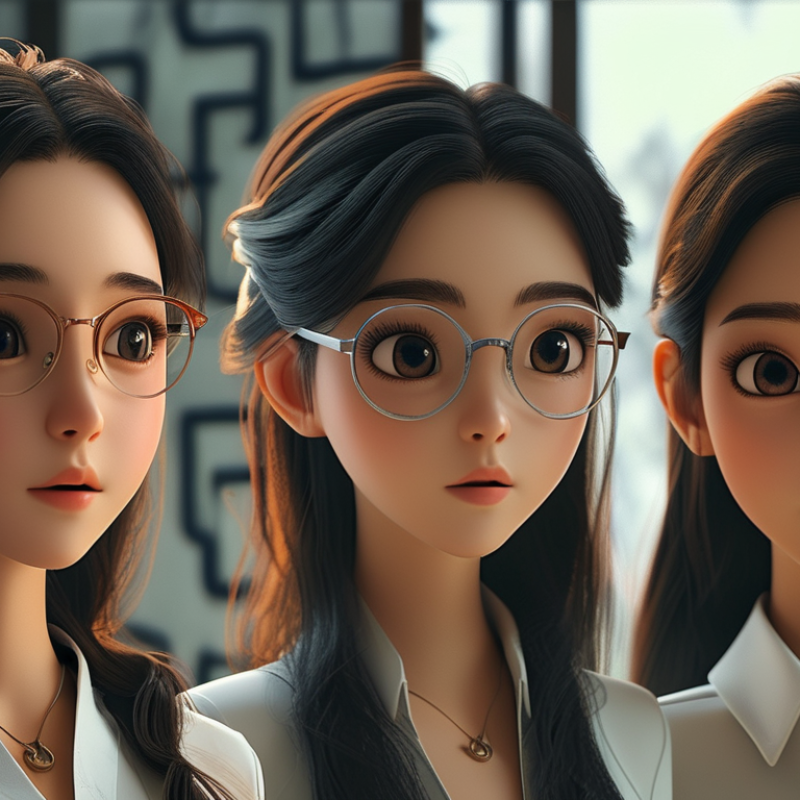
China’s computer graphic animation market expanded steadily in 2023, supported by theatrical films, streaming series, games, and advertising. Industry estimates place CG-related revenue near RMB 35–40 billion, although reporting standards differ between research firms. Some figures include visual effects and game cinematics, while others count only animation production.
The market’s estimated compound annual growth rate ranges from 8% to 12% through 2028. Domestic studios increased output across feature films, episodic content, short videos, and real-time production. Public production records suggest that China released dozens of major CG features and hundreds of serialized or short-form projects in 2023. The numbers are useful, but not perfectly comparable. That matters.
From a production perspective, larger studios are investing in virtual cameras, procedural environments, motion capture, and cloud-based rendering. These tools reduce repeated modeling work and support faster revisions. Smaller teams often compete through distinctive visual design rather than enormous render budgets. In practical project reviews, schedule control remains a stronger predictor of delivery than software choice. Quality still varies. Some market reports also combine completed projects with announced titles, which can inflate production volume. A careful assessment should separate released work, active production, and early development before ranking China’s leading computer graphic animation companies.

A credible top-ten ranking of computer graphic animation companies should begin with verifiable revenue, not online popularity. I would compare the latest three years of reported income, using consistent currencies and fiscal periods. Revenue shows commercial strength, but it can hide unstable project cycles. That matters.
Workforce quality deserves careful measurement. Headcount, senior artist numbers, technical directors, and training systems reveal production capacity. A large team is not automatically better. Turnover and contract dependence can distort the picture. Public filings, recruitment records, and executive interviews provide useful cross-checks, although each source has limits.
The IP portfolio should measure original characters, story worlds, software tools, and licensing depth. Ownership matters more than a long catalogue. Patent analysis should examine granted patents, active applications, citation strength, and relevance to rendering, simulation, or workflow technology. Award results add professional recognition, especially when juries publish clear criteria. I would separate major international awards from promotional honors. That distinction is easy to miss. Each company should receive weighted scores, with revenue and workforce stability balanced against innovation and creative ownership. The model remains imperfect because private companies may disclose little financial data, while awards can reflect judging trends rather than lasting production value.
China’s leading CG animation companies should be assessed through verified industry metrics, not online popularity alone. A reliable ranking can examine released feature films, completed series, credited production roles, international festival selections, and independently reported revenue. Public company records and official production credits offer stronger evidence than promotional claims. The strongest studios usually show consistent output, technical depth, and stable project delivery across several years.
Metrics still need careful reading. A large workforce does not guarantee better animation. A smaller team may create more original visual work with fewer resources. Project delays, changing credits, and limited financial disclosure can also weaken comparisons. I would score each studio across production volume, character animation quality, rendering capability, staff experience, and global distribution. These measurements are useful, but not flawless. A ranking can miss quiet talent.
Tips: Check recent credits, not only famous releases. Compare several years of performance. Look for transparent production information and verified awards. Viewer popularity matters, but it should not replace professional evidence. Teams with strong research, clean motion design, and dependable pipelines often perform better over time. Some studios may rank lower simply because their data remains incomplete, which deserves honest acknowledgment rather than speculation.
China’s computer graphic animation sector includes ten notable studios, selected for public credits, technical depth, and production experience. Their profiles show different strengths.
Founded in 1995 and headquartered in Beijing, one studio provides feature animation, visual effects, and virtual production for large fantasy films. Its major projects include creature design and digitally built historical cities.
Founded in 2001 in Shanghai, another studio focuses on animated features, character development, and television series. Its projects often combine traditional stories with modern visual language.
A Shenzhen-based company, founded in 2006, delivers game cinematics, advertising animation, and real-time rendering. It has created battlefield environments and interactive promotional films.
Founded in 2010 in Guangzhou, a smaller team specializes in architectural visualization, motion graphics, and immersive exhibitions. Its major work includes digital museums and urban planning displays.
Founded in 1998 and based in Chengdu, another company handles water simulation, crowd effects, and post-production for action films.
A Hangzhou studio established in 2008 develops children’s animation, educational content, and licensing visuals. Its projects feature colorful animal characters and classroom environments.
Founded in 2012 in Xi’an, one team produces short-form animation and science communication videos.
A Nanjing company, founded in 2004, serves television production with compositing, matte painting, and title design.
A Qingdao studio established in 2015 creates virtual idols, music videos, and live-event graphics.
The tenth company, founded in 1992 in Beijing, offers full-service animation and visual effects for cinema and streaming platforms.
Public information is sometimes incomplete. Project credits can also change. That requires careful checking before hiring.
China’s top ten computer graphic animation companies should be judged by more than visual polish. Their real strength lies in production technology, delivery reliability, and international reach. A credible review should examine real-time rendering, cloud-based pipelines, virtual production, and AI-assisted compositing. These tools can shorten a shot’s journey from storyboard to final frame. They also reduce repeated manual work, although automation still needs experienced artists.
The 2024 Global Games Market Report estimated worldwide game revenue at about 187.7 billion dollars, with 3.4 billion players. This scale creates demand for Chinese studios across games, VFX, advertising, and animated film. China’s 2023 national game industry report recorded approximately 16.36 billion dollars in overseas game sales. That figure shows commercial reach, but it does not prove sustainable profitability. Revenue is not enough.
Overseas performance depends on localization, stable rendering infrastructure, cultural sensitivity, and dependable project management. Teams serving North America, Europe, and Southeast Asia often need multilingual assets, regional servers, and carefully adapted character designs. VFX work also requires strict file tracking, color management, and secure cloud transfers. Small pipeline failures can damage a large production. The picture is not perfectly clean. Some firms still rely heavily on subcontracting, and published data rarely separates animation revenue from game revenue. That gap deserves scrutiny when comparing China’s leading ten companies.
| Position | Anonymous Industry Profile | Primary CG Capability | Technology Focus | Typical Client Segments | International Delivery Reach | Estimated Workforce Scale | Overseas Revenue Exposure | Global Competitive Advantage |
|---|---|---|---|---|---|---|---|---|
| 01 | Profile A | Feature animationVFX | GPU rendering, physically based simulation, digital environments, virtual production | Film studios, streaming platforms, advertising agencies | North America, Europe, East Asia, Southeast Asia | 1,000–3,000 specialists | 30%–50% | Large production capacity combined with end-to-end pipeline management |
| 02 | Profile B | Animated featuresOriginal IP | Character animation, procedural environments, facial performance, cloud collaboration | Domestic theatrical releases, international distributors, streaming services | Asia-Pacific, North America, selected European markets | 500–1,500 specialists | 20%–40% | Strong storytelling capability supported by scalable digital production |
| 03 | Profile C | Visual effectsVirtual production | LED-stage workflows, camera tracking, compositing, crowd and destruction simulation | Feature films, television, online video, live entertainment | East Asia, Southeast Asia, Middle East, North America | 300–1,000 specialists | 30%–60% | Flexible project teams and competitive production economics |
| 04 | Profile D | Game artReal-time graphics | Unreal Engine production, real-time rendering, 3D asset creation, motion capture | Game publishers, interactive media companies, simulation developers | Asia-Pacific, North America, Europe | 500–2,000 specialists | 40%–70% | High-volume asset production and real-time engine expertise |
| 05 | Profile E | Commercial animationMotion design | Product visualization, stylized animation, digital humans, motion graphics | Consumer brands, technology companies, automotive and retail sectors | Asia-Pacific, Europe, North America | 100–500 specialists | 30%–50% | Fast turnaround, multilingual production, and cost-efficient creative services |
| 06 | Profile F | Rendering servicesCGI production | Render-farm integration, distributed rendering, architectural visualization, automation | Architecture, real estate, product design, engineering and media | Asia-Pacific, Europe, Middle East | 100–500 specialists | 20%–40% | Reliable delivery infrastructure and efficient high-resolution rendering |
| 07 | Profile G | TV animationSeries production | 2D–3D hybrid workflows, rigging, layout automation, episodic production management | Broadcasters, streaming platforms, educational media, children’s content | Asia-Pacific, Europe, Latin America | 300–1,000 specialists | 20%–40% | Consistent episodic output and established outsourcing coordination |
| 08 | Profile H | Digital humansImmersive media | Facial capture, body tracking, synthetic media, augmented and virtual reality | Entertainment, museums, tourism, education and enterprise training | Asia-Pacific, Middle East, selected European markets | 100–500 specialists | 10%–30% | Integration of animation, interactive technology and experiential design |
| 09 | Profile I | Game developmentCo-development | Cross-platform development, technical art, shader creation, performance optimization | Mobile, PC and console publishers; independent game developers | North America, Europe, Japan, South Korea, Southeast Asia | 100–1,000 specialists | 40%–80% | Adaptable co-development teams and broad platform experience |
| 10 | Profile J | Post-productionCompositing | Color pipelines, rotoscoping, match moving, compositing, cleanup and restoration | Film, television, advertising and digital content producers | Asia-Pacific, Europe, North America | 100–500 specialists | 20%–50% | Specialized post-production talent and internationally compatible workflows |
![]() |
Need Help? Call Us 203-740-1877
|
We're ready to help identify, size and spec your pumps, filters |
Pumps, Parts, and Equipment – Guidance Included
103 Hempel Drive
Wolcott, CT 06716
Telephone: 203-740-1877
Toll Free Fax: 866-523-1693
Email: sale@rewritertool.com
