
China’s relay industry serves equipment makers across power distribution, automation, home appliances, and transport. This guide introduces ten Chinese electrical relay manufacturers and the strengths buyers may want to compare. Relays Electrical products can look similar in a catalog, yet their contact ratings, coil voltage, insulation distance, and service life differ. Small details matter. A relay selected for a control cabinet must match the actual load, switching frequency, ambient temperature, and available space.
The companies discussed here are considered through practical factors: product range, manufacturing capability, quality systems, technical support, and experience serving domestic or export markets. These indicators help build a useful shortlist, but they do not replace a datasheet review or sample testing. A polished website is not proof of performance. Buyers should confirm certifications for the intended application, request test reports, and check lead times and customization terms directly with each supplier. No list can capture every factory’s latest capacity or every project’s conditions. Rankings also depend on the buyer’s priorities; cost may matter to one team, while long mechanical life matters more to another. The comparison is a starting point, not a final verdict. We may miss a capable supplier. That’s worth acknowledging. With clear specifications and careful verification, readers can approach China’s relay market with better questions and fewer assumptions.
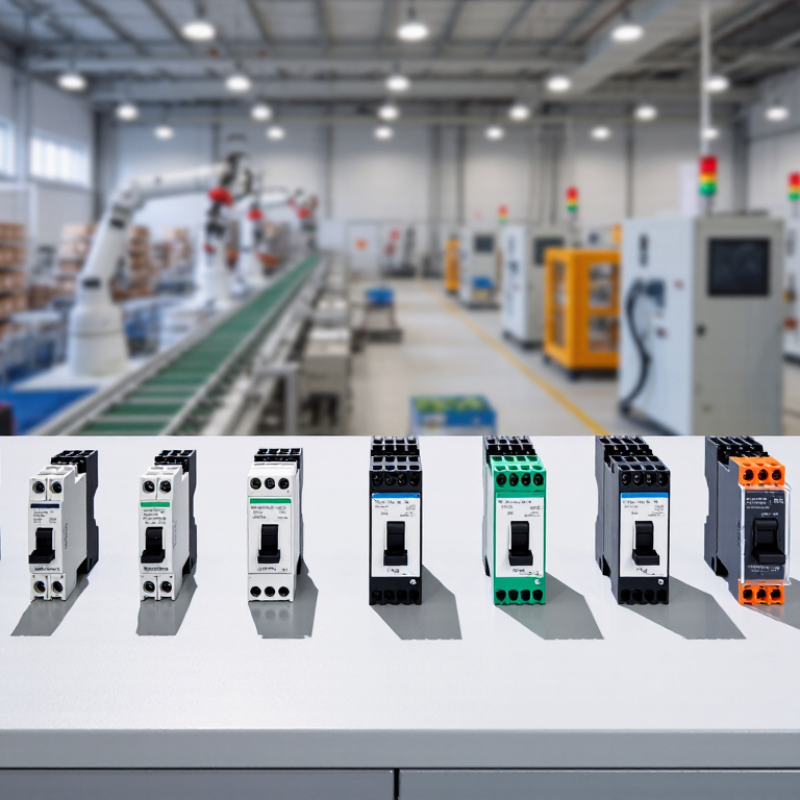
What Electrical Relays Are and How They Work
It is a switch. An electrical relay uses a small control signal to operate contacts in a separate circuit. In an electromechanical relay, current through a coil creates a magnetic field. That field pulls a metal armature, moving contacts with a distinct click. Normally open contacts close; normally closed contacts open. This separation lets a low-power control circuit switch a higher-power load, though it does not make every circuit safe by itself. Solid-state relays use semiconductor components instead of moving contacts, so they have no mechanical click and can suit frequent switching.
Selection depends on coil voltage, contact rating, load type, and expected switching frequency. A motor or solenoid can create an inductive voltage spike when switched off, stressing contacts. Check the relay’s specified load ratings, not only its headline current value. The IEA’s Electricity 2025 report says global electricity demand rose 4.3% in 2024. That broader growth makes dependable control equipment increasingly relevant, but it does not mean every application needs the same relay. A detail that is easy to overlook: contact wear and heat can change performance over time.
Tips: Match the coil voltage to the control supply, and check the load’s starting current. For DC coils, consider suppression components where the circuit design permits them. Leave space for heat dissipation, then verify operation under the actual load. One bench test is useful, but not the whole story.

China’s electrical relay manufacturing industry serves a broad range of needs, from compact control panels to heavy-duty industrial equipment. Production combines metal stamping, coil winding, contact assembly, and housing fabrication. Many factories use automated lines for repeatable processes, while technicians still inspect samples and adjust equipment. Details matter. A small variation in contact alignment can affect switching performance, heat, or service life.
Manufacturers typically develop relays for different voltage ratings, switching loads, mounting styles, and operating environments. Buyers should examine test procedures, material traceability, quality records, and the supplier’s ability to support design changes. In practice, a clear specification helps prevent mismatches between a relay and its application. However, impressive production capacity does not automatically mean consistent quality. Testing depth and process control can differ between suppliers, and paperwork may not reveal every weakness. That is worth questioning. China’s manufacturing base offers scale and technical flexibility, but reliable sourcing still depends on careful evaluation, sample testing, and ongoing communication.
Selecting a leading Chinese relay manufacturer means checking repeatable performance, not just a low quotation. Grid upgrades make this important. The IEA’s 2023 report, Electricity Grids and Secure Energy Transitions, sets the scale. It says annual grid investment needs to rise from about USD 300 billion to over USD 600 billion by 2030. The report also estimates that 80 million kilometres of grids must be added or refurbished by 2040.
Use IEC 61810-1 as a technical reference for electromechanical relay requirements. Ask for test evidence covering contact ratings, electrical endurance, insulation, and temperature rise. Check that test conditions match your intended load and switching frequency. A relay tested at a light load may not perform the same in a warm control cabinet. Paper claims aren’t enough.
Factory audits should examine calibration records, batch traceability, and how rejected units are handled. Request sample reports linked to production lots, not only a generic certificate. Confirm that the manufacturer can maintain stable coil voltage and contact resistance across repeat orders. One limitation: a short audit cannot prove long-term reliability. Still, documented processes and clear failure analysis offer stronger evidence than price or catalogue breadth alone.
Profiles of ten major electrical relay manufacturers in China are most useful when judged by product focus, not factory size alone. The group spans general-purpose PCB relays, high-current power relays, automotive switching, latching designs, and solid-state devices. Other profiles may center on industrial control, safety circuits, measurement equipment, household appliances, or customized assemblies. Look for practical details: rated voltage, contact arrangement, coil power, electrical life, and operating temperature. A compact relay beside a warm control cabinet tells a clearer story than a broad catalog claim.
MarketsandMarkets estimated the global relay market at USD 9.3 billion in 2023 and projected USD 12.5 billion by 2028, a 6.1% compound annual growth rate. This is a global estimate, not a China-only ranking, so it cannot verify which ten producers lead domestic sales. That distinction matters. Buyer checks should include test methods, traceable quality records, and sample performance under the intended load. Datasheets help, but they do not show every production variation. A careful profile should state what is documented and what still needs validation. That is less dramatic, but more dependable.
Electrical relays switch circuits in control panels, HVAC equipment, power systems, and vehicles. In a factory cabinet, a relay may start a motor, isolate a control signal, or trigger an alarm when temperature rises. Each application brings different demands. A relay near a vibrating compressor needs robust mounting and dependable contacts; one handling frequent switching needs suitable electrical endurance. Small details matter. Coil voltage, contact arrangement, load type, and ambient temperature all affect performance. A neat datasheet is not the whole story; real operating conditions can be messier than a test bench.
Quality assessment should cover contact resistance, dielectric strength, temperature rise, and mechanical and electrical endurance. IEC 61810-1 and IEC 60947-5-1 may be relevant references, depending on relay type and intended use. Buyers should verify test reports, traceability, and stated ratings rather than rely on claims alone. Trends include smaller components, lower coil power, and increased use of solid-state or hybrid switching in some applications. These options can reduce wear, but they may behave differently under overloads and electrical noise. There is no universal best relay. Careful application review still takes time.
Company names are intentionally omitted. The ten rows below summarize major relay product segments and their typical applications; they are not a ranking of individual manufacturers. Applicable standards depend on the specific product and its intended use.
| No. | Relay Segment | Typical Applications | Relevant Standards | Key Quality Checks | Industry Trends |
|---|---|---|---|---|---|
| 1 | General-purpose electromechanical relays | Control panels, appliances, building systems, and industrial equipment. | IEC 61810-1 for basic safety and functional requirements of elementary relays. | Contact resistance, coil operation, dielectric withstand, temperature rise, and endurance. | Smaller packages, lower coil power, and improved automated production inspection. |
| 2 | PCB signal and power relays | Control boards, measurement equipment, telecom equipment, and power switching on printed circuit boards. | IEC 61810-1; IEC 60664-1 may be relevant to insulation coordination in equipment design. | Switching capacity, insulation spacing, solderability, coil-to-contact isolation, and operating life. | Higher-density layouts and designs tailored to specific board-level loads. |
| 3 | Automotive relays | Vehicle body electronics, lighting, HVAC, pumps, and auxiliary power circuits. | ISO 16750 series addresses environmental conditions and testing for electrical and electronic equipment in road vehicles; application requirements vary. | Vibration, temperature cycling, electrical endurance, terminal integrity, and resistance to vehicle electrical transients. | Higher-temperature capability and demand linked to vehicle electrification. |
| 4 | High-current and power relays | Battery systems, industrial power distribution, charging equipment, and high-load switching. | IEC 61810-1 where applicable; IEC 60947 series may apply to low-voltage switchgear and controlgear devices within its scope. | Contact temperature rise, arc behavior, current-carrying capability, terminal strength, and endurance under specified loads. | Greater attention to thermal management and switching performance in electrified systems. |
| 5 | Latching relays | Smart meters, energy-control systems, and equipment requiring state retention with reduced continuous coil power. | IEC 61810-1 for applicable elementary relay requirements; product-specific metering requirements may also apply. | Set/reset operation, mechanical retention, contact resistance, switching endurance, and pulse-coil performance. | Use in energy-aware control and remotely managed metering applications. |
| 6 | Solid-state relays (SSRs) | Heater control, process automation, lighting, and applications needing frequent switching without mechanical contacts. | IEC 62314 covers solid-state relays; other equipment-level standards may also apply. | On-state voltage or resistance, leakage current, isolation, thermal performance, and switching behavior. | Improved thermal design and integration with electronic control systems. |
| 7 | Reed relays | Test and measurement instruments, switching matrices, and low-level signal circuits. | IEC 61810-1 may apply to the relay; instrument-level requirements depend on the end equipment. | Contact resistance, insulation resistance, switching stability, coil operation, and mechanical endurance. | Continued demand for compact switching with low signal disturbance in instrumentation. |
| 8 | Safety relays and forcibly guided contact relays | Safety-related machine control, emergency-stop circuits, and monitoring circuits when used in a suitably designed system. | IEC 61810-3 specifies requirements for electromechanical elementary relays with forcibly guided (mechanically linked) contacts; machine-level safety standards also matter. | Contact linkage, fault detection behavior, dielectric strength, endurance, and documented production traceability. | More emphasis on verifiable safety functions and system-level documentation. |
| 9 | Thermal overload relays | Motor protection in industrial control panels, commonly alongside contactors and motor starters. | IEC 60947-4-1 addresses contactors and motor-starters, including relevant overload protection devices within its scope. | Trip characteristics, phase-loss response where specified, reset operation, temperature compensation, and calibration consistency. | Integration with electronic motor management and connected control panels. |
| 10 | Protection and monitoring relays | Power-system protection, feeder monitoring, and detection of electrical conditions such as overcurrent or voltage deviation. | IEC 60255 series covers measuring relays and protection equipment; the relevant part depends on the device function. | Measurement accuracy, pickup and timing behavior, insulation, electromagnetic compatibility, and functional verification. | Digital communications, event records, and coordination with increasingly automated grids. |
Standards are listed as potentially relevant references, not as a claim that every product in each segment is certified to them. Confirm the current edition, product scope, and market-specific certification requirements before procurement.
![]() |
Need Help? Call Us 203-740-1877
|
We're ready to help identify, size and spec your pumps, filters |
Pumps, Parts, and Equipment – Guidance Included
103 Hempel Drive
Wolcott, CT 06716
Telephone: 203-740-1877
Toll Free Fax: 866-523-1693
Email: sale@rewritertool.com
