
The global beauty market is expanding, but “top” does not mean one machine fits every buyer. McKinsey’s 2023 beauty market report projected the industry could reach about $590 billion by 2028, with skincare representing roughly 40% of sales. This growth is increasing demand for professional and home-use Skin Care Machine solutions.
The answer depends on treatment goals, customer expectations, budget, and operating conditions. Grand View Research reports strong growth in beauty devices, supported by rising interest in non-invasive skincare and personalized treatments. However, market growth alone cannot prove a machine’s quality. Buyers should examine measurable specifications, user safety, maintenance needs, and documented performance.
Look closely.
A reliable comparison should include energy output, treatment depth, cooling functions, replaceable parts, and operator training. For example, a salon may need a durable multifunction platform for daily appointments. A home retailer may prefer a lightweight device with simple controls and low maintenance. These are different purchasing decisions.
Supplier credibility also matters. Buyers should request test reports, quality-management evidence, warranty terms, and clear product labeling. Regulatory requirements vary between markets, so professional review may be necessary before distribution. Certifications should be verified rather than accepted from a sales brochure.
Some product descriptions still use vague promises, such as “instant lifting” or “permanent renewal.” Those claims deserve careful questioning. The strongest Skin Care Machine is usually the one supported by transparent evidence, practical training, stable after-sales service, and realistic treatment outcomes. That conclusion is less exciting, but more useful for global buyers.
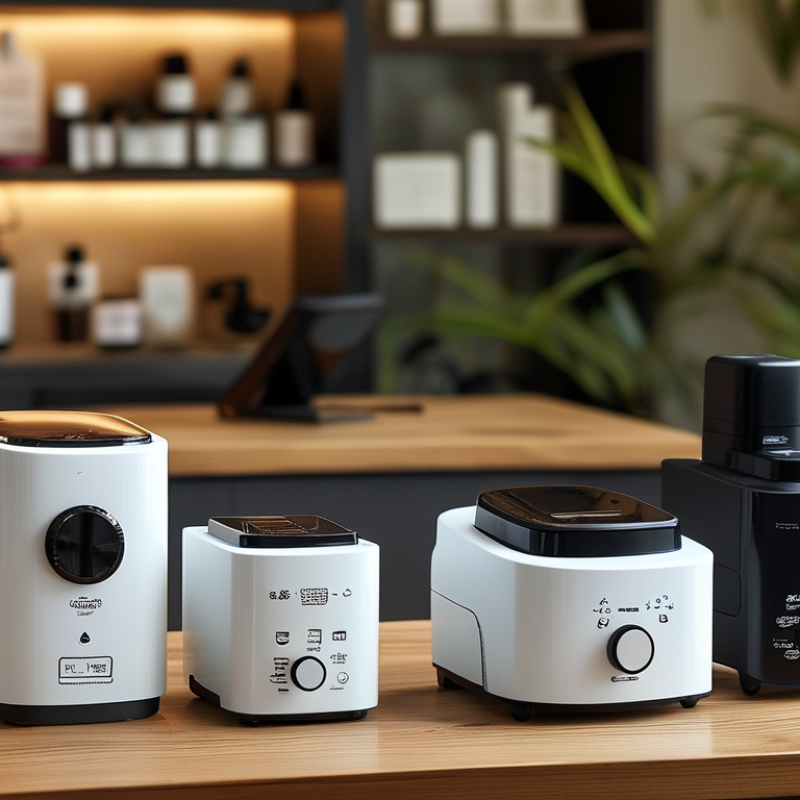
A skin care machine is an electronic device designed to support cleansing, hydration, exfoliation, or visible skin improvement. It does not replace a dermatologist or a consistent routine. Depending on its design, it may use ultrasonic vibration, radio frequency, LED light, microcurrent, or gentle suction. Each technology interacts with the skin differently. That difference matters.
Ultrasonic devices create rapid vibrations that help loosen surface debris and spread water-based products. LED systems deliver selected light wavelengths to the skin’s surface, while radio frequency produces controlled warmth in deeper layers.
Microcurrent uses very low electrical signals across the skin. Users should follow the supplied timing and contact instructions. More intensity is not automatically better.
I once assumed more settings meant better results; that assumption was wrong. Excessive use can leave skin dry, irritated, or uncomfortable.
For global buyers, the top skin care machine is one with clear technical documentation, adjustable settings, traceable safety testing, and reliable after-sales support. Check electrical certification for your destination, plug compatibility, warranty terms, cleaning requirements, and contraindications. A professional seller should explain realistic outcomes instead of promising instant transformation. Patch testing and clean contact surfaces reduce avoidable problems, though they cannot remove every risk. Sensitive skin may need professional advice before energy-based use. Results also depend on age, skin condition, technique, and consistency. That part is often overlooked.

What Is the Top Skin Care Machine for Global Buyers?
Which Skin Concerns Can Skin Care Machines Address?
There is no universally best skin care machine. The right choice depends on the concern, skin type, treatment area, and operator training. The 2023 ISAPS Global Survey recorded 19,117,827 non-surgical aesthetic procedures worldwide. This demand shows a growing interest in practical, minimally invasive skin treatments.
LED devices may support acne management and calm visible redness. Radiofrequency machines use controlled heat to improve the appearance of mild laxity. Microcurrent devices can create a temporary lifted appearance, while ultrasonic tools may help product application and surface cleansing. Intense pulsed light can target uneven pigmentation and some vascular redness, but results depend heavily on skin tone and settings.
Evidence is not equally strong for every device. A clinical review in the Journal of Cosmetic Dermatology notes that energy-based treatments can improve texture, pigmentation, and firmness, yet outcomes vary between patients. The American Academy of Dermatology also stresses professional assessment for persistent acne, suspicious pigmentation, or changing lesions. Machines should not replace diagnosis.
Buyer caution matters.
A global purchaser should check adjustable energy levels, cooling systems, documented testing, clear contraindications, and local regulatory requirements. Training records are equally important. A powerful device can still produce poor results when used on unsuitable skin. I would also question impressive before-and-after images, because lighting, filters, and treatment timing can distort comparisons. In practice, the most reliable machine is often the one that matches a specific concern safely, not the one with the longest feature list.
Skin-care machines are commonly selected according to the concern they are designed to address. The chart below compares approximate global prevalence estimates for several major dermatological concerns.
Approximate share of the global population affected: acne 9.4%, atopic dermatitis 3%, psoriasis 2%, and vitiligo 0.75%. Prevalence varies by age, region, and study methodology. Source references: Global Burden of Disease Study 2010, International Eczema Council, World Psoriasis Day estimates, and global vitiligo epidemiology reviews.
Global buyers should not choose a skin care machine by appearance or advertised power.
Compare the treatment goal, operating method, user training, and local compliance requirements. An ultrasonic device may support gentle product application, while radio frequency equipment provides controlled surface warming.
LED systems offer low-contact sessions, but performance depends on wavelength, dose, and consistent use. Hydrodermabrasion combines cleansing with fluid delivery, yet it requires careful water handling. These are different tools.
Ask suppliers for independent test documents, user manuals, and clear maintenance schedules. Check electrical voltage, plug standards, language support, and replacement-part availability.
Confirm whether the machine suits professional clinics, salons, or supervised home settings. A reliable supplier should explain operating limits instead of promising instant results.
Training quality matters too. Even a well-designed device can perform poorly when staff skip skin assessment or misuse treatment settings.
Experienced operators often compare noise, cleaning time, handpiece weight, and treatment speed during a live demonstration.
A machine that saves ten minutes per session may improve daily workflow significantly. However, advertised return estimates can be overly optimistic.
A lower purchase price may hide costly consumables or limited technical support. Buyers should record these details in a comparison table and request references from similar markets.
The best choice may not be the most advanced model. It should match local users, regulations, service capacity, and realistic treatment expectations.
For global buyers, the top skin care machine is not simply the newest model. Safety evidence matters more than screen size or treatment speed. The ISAPS 2023 Global Survey recorded about 19.1 million non-surgical aesthetic procedures worldwide. That demand increases the need for disciplined equipment selection.
Check the device’s intended use, risk classification, and technical file. FDA guidance makes clear that 510(k) clearance is not the same as product approval. Ask for a valid declaration of conformity, electrical safety testing, and traceable quality records. IEC 60601-1 addresses basic electrical and essential performance safety. ISO 14971 supports structured medical-device risk management. ISO 13485 certification can also indicate a controlled manufacturing system. Certificates alone are not enough. Verify their scope and expiry dates.
Maintenance should be practical. The supplier should provide cleaning instructions, service intervals, software-update procedures, and spare-part availability. Keep treatment-hour records, calibration reports, and incident logs. Operators need documented training, especially for heat, light, suction, or needle-based systems. The World Health Organization links strong maintenance systems with safer, more reliable health technology, although cosmetic equipment is often managed less rigorously. That gap deserves attention. A checklist can miss human error. I would also inspect cable insulation, cooling vents, handpiece seals, and emergency-stop functions before purchase. If local technicians cannot test the machine, downtime and safety risks may grow quickly. Clear documentation is not exciting. It is essential.
| Technology | Typical Skin-Care Applications | Key Safety Risks | Important Technical and Regulatory References | Cleaning and Maintenance Factors | Global-Buyer Assessment |
|---|---|---|---|---|---|
| LED Photobiomodulation Non-ionizing visible or near-infrared light | Supportive care for the appearance of fine lines, redness, and uneven skin tone; commonly used in professional and home-care devices. | Eye exposure, photosensitivity reactions, excessive heat, and possible interaction with photosensitizing medicines. Blue-light exposure requires additional eye and skin assessment. | IEC 60601-1 may apply to medical electrical equipment; IEC 60601-1-2 addresses electromagnetic compatibility; IEC 60601-2-57 covers certain non-laser light-source equipment; IEC 62471 is used for photobiological safety assessment; ISO 14971 supports risk management. | Clean the contact surface after each user where applicable; inspect LEDs, cables, ventilation openings, and protective eyewear regularly. Verify irradiance and treatment timer performance according to the instructions for use. | Strong overall balance Generally low consumable cost and broad usability when exposure limits, eye protection, and intended-use claims are properly controlled. |
| Radiofrequency (RF) Controlled electrical energy producing tissue heating | Temporary improvement in the appearance of skin firmness and texture through controlled heating. | Burns, excessive heating, pain, uneven energy delivery, and interference with implanted electronic devices. Conductive gel or a suitable coupling medium may be required. | IEC 60601-1, IEC 60601-1-2, and ISO 14971 may apply depending on product classification and intended use. Electrical insulation, leakage current, temperature control, and electromagnetic compatibility should be documented. | Disinfect the applicator after each treatment; check electrode surfaces, cables, cooling systems, temperature sensors, and energy output. Replace damaged applicators or worn cables immediately. | Effective but operator-dependent Suitable for trained users who can control skin temperature, contact pressure, treatment duration, and contraindications. |
| Intense Pulsed Light (IPL) Broad-spectrum pulsed light | Hair reduction and selected appearance-related pigmentation or vascular concerns, subject to local authorization and user qualification. | Burns, blistering, pigmentary changes, eye injury, and paradoxical hair growth in some situations. Risk varies with skin tone, tanning, fluence, pulse duration, and cooling. | IEC 60601-1 and IEC 60601-1-2 may apply; IEC 60601-2-57 is relevant to certain non-laser light-source equipment. ISO 14971 supports risk management. Local rules may classify IPL as a medical device or regulated aesthetic device. | Clean the light window after every session; inspect filters, cooling channels, handpieces, cables, and protective eyewear. Confirm pulse output, cooling performance, and lamp or flash-module service status at scheduled intervals. | High performance, higher compliance burden Requires stronger training, documentation, skin assessment, eye protection, and jurisdiction-specific regulatory review. |
| Microcurrent Low-level electrical current | Temporary cosmetic improvement in the appearance of facial tone and firmness; often used with a conductive medium. | Skin irritation, discomfort, electrical shock, and potential interference with implanted electronic devices. Avoid use over broken skin unless the product is specifically authorized for that purpose. | IEC 60601-1 and IEC 60601-1-2 may apply when the device falls within medical electrical equipment requirements. ISO 14971 and electrical safety testing should support the intended use and risk profile. | Disinfect conductive probes after each use; inspect electrode coatings, charging ports, cables, and current-output consistency. Use only compatible conductive products and keep rechargeable batteries within their specified service conditions. | Portable and cost-efficient Attractive for mobile or home-use channels, but product claims and electrical protections must be clearly documented. |
| Ultrasound Mechanical acoustic energy | Cosmetic product infusion support, cleansing procedures, and appearance-related skin treatments, depending on frequency and output. | Local heating, discomfort, irritation, and tissue effects if output is excessive or the applicator remains stationary. Avoid use over areas where ultrasound is contraindicated. | IEC 60601-1 and IEC 60601-1-2 may apply to medical electrical equipment. ISO 14971 supports risk management. Output frequency, intensity, duty cycle, contact detection, and treatment timer should be verified. | Remove gel or residue after each use; disinfect the applicator according to material compatibility. Inspect the treatment head, cable, seals, and output consistency; do not immerse non-waterproof components. | Moderate maintenance demand Practical for professional settings when contact, movement, coupling medium, and output controls are well managed. |
| Decision Dimension | What Buyers Should Verify |
|---|---|
| Intended use and claims | Confirm whether the product is cosmetic, professional, or medical. Marketing claims, user qualifications, and regulatory obligations depend on the intended purpose and jurisdiction. |
| Certification and conformity evidence | Request applicable test reports, declaration of conformity, risk-management documentation, electrical safety and EMC results, biocompatibility information for skin-contact parts, and quality-system evidence where required. CE marking is a conformity mark, not a universal guarantee of clinical performance. |
| User protection | Check eye protection, emergency shut-off, overheating protection, skin-contact detection, treatment timers, password or access controls, warning labels, and contraindication guidance. |
| Maintenance and serviceability | Evaluate cleaning instructions, replaceable parts, calibration requirements, expected service intervals, spare-part availability, software support, warranty terms, and the availability of local technical service. |
| Best general choice | For buyers seeking a broadly usable device with comparatively manageable maintenance and safety controls, LED photobiomodulation is often the most balanced option. IPL and RF may offer more intensive results but require stronger training, risk controls, and regulatory review. |
Note: Standards, certification routes, registration requirements, and maintenance intervals vary by intended use and destination market. Always follow the latest manufacturer instructions for use and the requirements of the relevant national authority.
Choosing the top skin care machine starts with the buyer’s treatment goal, not the highest power rating. A salon treating acne needs different functions from a clinic handling pigmentation or fine lines. The International Society of Aesthetic Plastic Surgery reported more than 34 million surgical and nonsurgical aesthetic procedures worldwide in 2023. That demand is impressive, but it does not make every device suitable. A polished demonstration can mislead. Look for adjustable energy, clear treatment limits, and settings suitable for different skin tones. Ask for clinical evidence, not only before-and-after photographs.
Independent data also deserves careful reading. McKinsey’s 2023 beauty industry report projected the global beauty market could approach 590 billion dollars by 2028. This growth may encourage rushed purchasing. I would compare the machine’s wavelength, cooling method, handpiece lifespan, and treatment time. Confirm whether replacement parts are available in the buyer’s country. Check electrical safety documents, quality-management records, and local registration requirements. ISO 13485 certification can support manufacturing confidence, but it does not replace market approval. Test the workflow. A device that needs ten minutes of setup between clients may reduce daily revenue. Staff training matters too, especially when clients have sensitive or darker skin. I once underestimated maintenance costs in a simple equipment comparison; that was a useful mistake. Buyers should request a sample protocol, warranty terms, service response times, and realistic operating costs before making a decision. Looks are not enough.
![]() |
Need Help? Call Us 203-740-1877
|
We're ready to help identify, size and spec your pumps, filters |
Pumps, Parts, and Equipment – Guidance Included
103 Hempel Drive
Wolcott, CT 06716
Telephone: 203-740-1877
Toll Free Fax: 866-523-1693
Email: sale@rewritertool.com
