Choosing the right 50 gallon drum pump seems simple until the liquid refuses to move smoothly. Water, detergent, oil, and thicker fluids behave very differently. A pump that works well for thin chemicals may struggle with heavy lubricants. Small details matter.
In practical handling, the drum opening, fluid viscosity, temperature, and required flow rate should guide the decision. Measure the container connection carefully. Check whether the pump reaches near the bottom without bending or leaking. Manual pumps suit occasional transfer and low-volume work. Electric or pneumatic models may reduce effort during frequent dispensing. However, faster is not always better. Excessive flow can cause splashing, spills, or inaccurate filling.
Material compatibility deserves careful attention. Review the manufacturer’s specifications and the liquid’s safety information before purchase. Polypropylene, stainless steel, and other materials each suit different conditions. Seals and tubing can fail even when the main pump body appears unaffected. That mistake is easy to overlook.
Reliability also depends on maintenance. Inspect the intake tube, hose, valve, and connections before each use. Keep the pump clean and store it according to the supplier’s instructions. I have seen users focus on price, then replace damaged seals weeks later. That approach may save money initially, but not over time. There is no universal winner. The best choice balances fluid compatibility, handling comfort, flow control, drum fit, and long-term support. When uncertain, ask the pump manufacturer for written compatibility guidance rather than guessing. A careful selection protects the operator, the equipment, and the material being transferred.
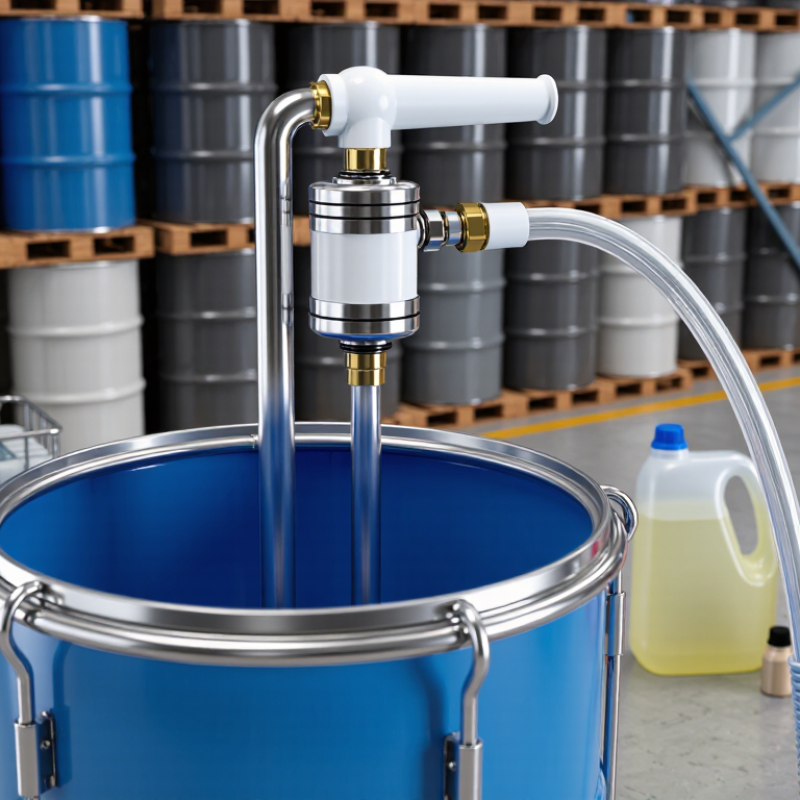
Understanding the drum pump type starts with the fluid. A 50-gallon drum holds about 189 liters, so repeated manual lifting creates avoidable strain. Manual siphon and rotary pumps suit water-like liquids, light oils, and occasional transfer work. They need no electricity. However, flow can vary with operator effort. I have seen simple pumps selected for thick liquids, then abandoned beside half-empty drums. Viscosity matters.
Electric drum pumps provide steadier flow and better control for frequent dispensing. Variable-speed models help when a process needs a slow start, such as filling a narrow container. Pneumatic pumps work well where compressed air is already available or electrical ignition control requires careful planning. They still need clean, regulated air. Sanitary pumps use smooth, cleanable wetted surfaces for food, cosmetic, or pharmaceutical production. They cost more, but cleaning failures cost more. Keep it practical.
Industry reports support careful sizing. Grand View Research’s 2024 industrial pumps analysis estimates the global market will expand at about 4.8% annually through 2030, reflecting wider demand for efficient fluid handling. The U.S. Department of Energy’s Improving Pumping System Performance guidance emphasizes correct sizing, reduced restriction, and suitable controls. These principles apply to drum pumps too. Check fluid temperature, viscosity, drum opening, hose length, discharge height, and required flow before purchasing. The cheapest pump may fit the drum, but not the job.
How to Choose the Best 50 Gallon Drum Pump
Evaluating Pump Materials, Compatibility, and Chemical Resistance
A 50-gallon drum pump should match the liquid, not just the container. Polypropylene suits many mild acids, alkalis, and water-based fluids. Stainless steel offers stronger mechanical durability and handles many solvents. However, no material works safely with every chemical.
Check the chemical safety data sheet before selecting the pump. Compare the fluid with the pump body, tube, seals, gaskets, and discharge hose. A compatible body can still fail if its seal swells. Fit matters. Confirm viscosity, temperature, concentration, and exposure time. Thick liquids may need a wider tube or a powered pump.
I recommend testing a small amount under controlled conditions first. Watch for softening, cracks, discoloration, leaks, or stiff operation. Do not rely on appearance alone. Some plastics remain attractive while losing strength internally. In practical drum handling, operators should inspect the tube after each use and rinse it only when the chemical allows safe rinsing. Grounding may also matter when transferring flammable liquids. That detail is easy to miss. Recheck compatibility when suppliers change a formulation, because a minor additive can alter seal performance. A pump that worked last month may not remain suitable.
Material-selection guide for transferring liquids from a standard 50-gallon drum. Ratings are general guidance for commonly used, unfilled materials at moderate temperatures; always verify the exact chemical concentration, temperature, exposure time, seal material, and pump construction before use.
| Wetted Pump Material | Typical Pump Type | Approximate Continuous Temperature Range | Water, Salt Solutions, and Mild Acids | Strong Acids and Oxidizers | Alkaline Solutions | Oils, Fuels, and Hydrocarbons | Alcohols and Common Solvents | Recommended Applications | Important Limitations |
|---|---|---|---|---|---|---|---|---|---|
| HDPE (High-Density Polyethylene) |
Manual rotary or lever pump; low-pressure electric pump | Approximately -40 to 60°C (-40 to 140°F) |
Excellent | Good for many dilute acids | Excellent | Conditional | Conditional | Water-based chemicals, detergents, diluted acids, caustic solutions, and many agricultural liquids | Can be attacked or softened by aromatic hydrocarbons, chlorinated solvents, and some strong oxidizers; temperature and concentration are critical |
| Polypropylene (PP) | Manual drum pump, air-operated diaphragm pump, or electric pump | Approximately -20 to 80°C (-4 to 176°F) |
Excellent | Good for many acids | Excellent | Conditional | Good with many alcohols | Acids, bases, salts, plating solutions, cleaning agents, and general water-based chemicals | Less suitable for some aromatic, chlorinated, and highly aggressive organic solvents; brittle at low temperatures |
| PVDF (Polyvinylidene Fluoride) |
Air-operated diaphragm pump or precision electric drum pump | Approximately -40 to 120°C (-40 to 248°F) |
Excellent | Excellent with many acids and halogens | Conditional | Good | Good with many solvents | High-purity chemicals, concentrated acids, halogen-containing liquids, and demanding corrosive-service applications | Strong hot bases and certain polar solvents may cause stress cracking or chemical attack; higher cost than PP or HDPE |
| 316 Stainless Steel | Manual rotary pump, electric pump, or air-operated diaphragm pump | Approximately -20 to 150°C (-4 to 302°F), design-dependent |
Excellent | Conditional | Good | Excellent | Excellent with many solvents | Oils, fuels, lubricants, solvents, hot liquids, and applications requiring high mechanical strength | Vulnerable to hydrochloric acid, high-chloride solutions, pitting, and some concentrated acids; inspect welds and crevices |
| PTFE (Polytetrafluoroethylene) |
Diaphragm, piston, or seal component used in a compatible pump assembly | Approximately -40 to 180°C (-40 to 356°F), component-dependent |
Excellent | Excellent with nearly all common acids | Excellent | Excellent | Excellent | Highly corrosive chemicals, aggressive solvents, acids, bases, and applications requiring chemically resistant diaphragms or seals | Soft and susceptible to creep; it is often used for wetted seals or diaphragms rather than as the sole structural pump body |
| PVC (Polyvinyl Chloride) |
Manual or air-operated pump for cool, nonflammable liquids | Approximately 0 to 60°C (32 to 140°F) |
Excellent | Good with many dilute acids | Excellent | Poor to conditional | Poor with ketones and many solvents | Water treatment chemicals, dilute acids, salts, and nonflammable aqueous solutions | Not recommended for many fuels, aromatic hydrocarbons, ketones, or hot liquids; can become brittle with age or cold exposure |
How to Choose the Best 50 Gallon Drum Pump
Choosing a 50 gallon drum pump starts with its power source. Electric models suit fixed workstations with nearby outlets. Battery-powered pumps offer mobility across storage areas. Pneumatic pumps can perform well where compressed air is already available. Check the liquid’s viscosity before choosing. Thick fluids may need stronger torque and wider internal passages. A pump that struggles sounds strained and wastes time.
Flow rate should match the task, not personal impatience. A high rate seems attractive, but it can cause splashing, foaming, or inaccurate filling. For small containers, a controlled low-flow pump gives better results. For larger transfer jobs, choose a model with enough capacity to reduce waiting. Measure the hose length and lift height, too. Both can reduce real-world flow. Manufacturer figures are useful, but field conditions may differ.
The dispensing method also affects daily accuracy. A manual lever works for occasional transfers and needs no power. A trigger-controlled pump gives better start-and-stop control. Metered dispensing helps repeat consistent quantities, especially when filling several containers. Use compatible hoses, seals, and receiving vessels for the liquid being handled. Keep the drum stable and inspect connections before pumping. I have learned that “universal” compatibility is often overstated. Rechecking the material data can prevent a small leak from becoming an expensive cleanup.
When choosing a 50-gallon drum pump, I examine safety controls before comparing flow rates. A pump should match the liquid, drum material, temperature range, and workplace ventilation. For electrically powered models, inspect cord condition, grounding, overload protection, and switch location. Air-powered units need regulated pressure and secure connections. Small details matter. An emergency shutoff should remain reachable, even when the drum sits beneath a workbench. Static control may also matter with certain liquids, so site procedures should guide the setup.
Maintenance affects reliability more than a glossy specification sheet. After use, operators should drain the tube, inspect seals, and wipe residue from the intake. Check the hose for soft spots or swelling, and replace worn gaskets before they leak. A simple weekly log can record noise, vibration, flow changes, and cleaning dates. I once treated a slow flow rate as a motor problem. The real cause was a partially blocked intake screen. That mistake cost time, but it also changed our inspection routine. Not every warning is obvious.
Operating cost includes energy, replacement parts, labor, and product loss from drips. A cheaper pump can become expensive if seals fail often or cleaning takes too long. Compare expected duty cycles, spare-part availability, and component replacement costs. Keep records for several months. Real usage often differs from estimates. Choose a design that workers can handle without forcing connections or lifting a full drum. That practical fit is easy to overlook during purchasing.
How to Choose the Best 50 Gallon Drum Pump
Matching the pump to your drum, workplace, and usage requirements starts with measurements. A 50-gallon drum may have different bung sizes, heights, and internal openings. Measure the drum depth before choosing the dip tube. Select a low-viscosity pump for water-like fluids. Thick fluids need stronger torque and wider passages. Confirm chemical compatibility with the tube, seals, and discharge hose. Published flow rates can mislead when liquids become cold or thick.
Workplace conditions matter equally. Manual pumping may suit occasional transfers, but repeated strokes increase fatigue. The U.S. Bureau of Labor Statistics recorded 2,607,900 nonfatal workplace injuries and illnesses in private industry during 2023. This figure is not pump-specific, yet it supports reducing repetitive handling. NIOSH identifies forceful exertion and awkward postures as key musculoskeletal risk factors. For flammable liquids, follow OSHA 29 CFR 1910.106 and use suitable bonding and grounding procedures. Corrosive liquids require careful material selection and leak control.
Tips: Measure twice. Check the drum opening. Match pump materials to the fluid. Compare flow under real temperature conditions. Leave room for safe hose routing. A small test transfer can reveal problems before daily use. The cheapest pump may not be the most practical choice. Recheck the decision after operators use it for one full shift.
Matching the pump to the drum, workplace, and usage requirements starts with understanding expected throughput. The chart shows representative planning values for low-viscosity liquids from a 50-gallon drum, such as water-based fluids and light oils.
Manual pumps are practical for occasional transfer without power, while electric and pneumatic pumps are better suited to frequent dispensing and higher throughput. Actual performance varies with liquid viscosity, hose length, lift height, drum fittings, and operating pressure.
![]() |
Need Help? Call Us 203-740-1877
|
We're ready to help identify, size and spec your pumps, filters |
Pumps, Parts, and Equipment – Guidance Included
103 Hempel Drive
Wolcott, CT 06716
Telephone: 203-740-1877
Toll Free Fax: 866-523-1693
Email: sale@rewritertool.com